As a supplier of inrunner brushless motors, I’ve had numerous discussions with engineers, hobbyists, and businesses about the various aspects of these motors. One topic that often comes up is the back electromotive force (back – EMF) of an inrunner brushless motor. In this blog post, I’ll delve into what back – EMF is, its significance, and how it impacts the performance of inrunner brushless motors. Inrunner Brushless Motor
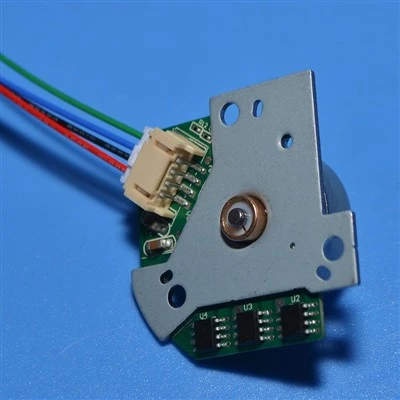
Understanding Back – EMF
To understand back – EMF, we first need to have a basic understanding of how an inrunner brushless motor works. An inrunner brushless motor consists of a stationary stator with coils and a rotating rotor with permanent magnets. When an electric current is applied to the stator coils, a magnetic field is created. This magnetic field interacts with the magnetic field of the rotor, causing the rotor to rotate.
Back – EMF is a phenomenon that occurs as a result of Faraday’s law of electromagnetic induction. According to this law, when a conductor (in this case, the stator coils) is exposed to a changing magnetic field, an electromotive force (EMF) is induced in the conductor. In an inrunner brushless motor, as the rotor rotates, the magnetic field passing through the stator coils changes continuously. This changing magnetic field induces an EMF in the stator coils that opposes the applied voltage.
Mathematically, the back – EMF (E) can be expressed as (E = k \cdot \omega), where (k) is the motor’s back – EMF constant and (\omega) is the angular velocity of the rotor. The back – EMF constant (k) is a characteristic of the motor and depends on factors such as the number of turns in the stator coils, the strength of the permanent magnets, and the motor’s physical design.
Significance of Back – EMF
The back – EMF in an inrunner brushless motor plays several crucial roles:
Speed Regulation
One of the most important functions of back – EMF is speed regulation. As the motor speeds up, the back – EMF increases. Since the back – EMF opposes the applied voltage, the net voltage across the stator coils decreases. This reduction in net voltage leads to a decrease in the current flowing through the coils. As a result, the motor’s torque decreases, and the motor reaches a stable operating speed. Conversely, if the motor is loaded and its speed decreases, the back – EMF also decreases. This allows more current to flow through the coils, increasing the torque and helping the motor maintain its speed.
Energy Efficiency
Back – EMF also contributes to the energy efficiency of the motor. When the motor is running at a steady speed, the back – EMF reduces the amount of current required to maintain that speed. This means that less electrical energy is converted into heat, and more is converted into mechanical energy. As a result, inrunner brushless motors with a well – designed back – EMF characteristic are more energy – efficient compared to motors without this feature.
Motor Protection
Back – EMF can act as a form of protection for the motor. If the motor is suddenly stopped or stalled, the back – EMF drops to zero. This causes a large increase in the current flowing through the stator coils, which can damage the motor. However, modern motor controllers are designed to detect this sudden increase in current and take appropriate action, such as reducing the applied voltage or shutting off the motor, to prevent damage.
Measuring Back – EMF
Measuring the back – EMF of an inrunner brushless motor can provide valuable insights into the motor’s performance. There are several ways to measure back – EMF, but one common method is to use a motor controller with built – in back – EMF sensing capabilities. These controllers can measure the voltage induced in the stator coils and use this information to optimize the motor’s performance.
Another way to measure back – EMF is to use an oscilloscope. By connecting the oscilloscope to the stator coils, you can observe the waveform of the back – EMF. The amplitude of the waveform is proportional to the motor’s speed, while the shape of the waveform can provide information about the motor’s magnetic field distribution and the quality of its design.
Impact of Back – EMF on Motor Performance
The back – EMF characteristic of an inrunner brushless motor has a significant impact on its performance in several ways:
Torque – Speed Curve
The back – EMF affects the torque – speed curve of the motor. As the motor speed increases, the back – EMF increases, reducing the net voltage across the stator coils. This leads to a decrease in the torque produced by the motor. As a result, the torque – speed curve of an inrunner brushless motor is typically a downward – sloping curve. Understanding the torque – speed curve is crucial for selecting the right motor for a specific application.
Power Output
The back – EMF also affects the power output of the motor. The power output of a motor is given by the product of the torque and the speed. Since the torque decreases with increasing speed due to the back – EMF, there is an optimal speed at which the motor produces maximum power. This optimal speed is determined by the motor’s design and the characteristics of the back – EMF.
Response Time
The back – EMF can also impact the motor’s response time. When a change in the applied voltage or load occurs, the back – EMF takes some time to adjust. This can cause a delay in the motor’s response to the change. However, modern motor controllers are designed to minimize this delay by using advanced control algorithms.
Applications and Considerations
Inrunner brushless motors with well – understood back – EMF characteristics are used in a wide range of applications, including drones, electric vehicles, and industrial automation. In drones, for example, the back – EMF helps in maintaining a stable flight by regulating the motor speed. In electric vehicles, it contributes to the overall energy efficiency and performance of the drivetrain.
When selecting an inrunner brushless motor for a specific application, it’s important to consider the back – EMF characteristics. Factors such as the back – EMF constant, the torque – speed curve, and the power output should be carefully evaluated to ensure that the motor meets the requirements of the application.
Conclusion
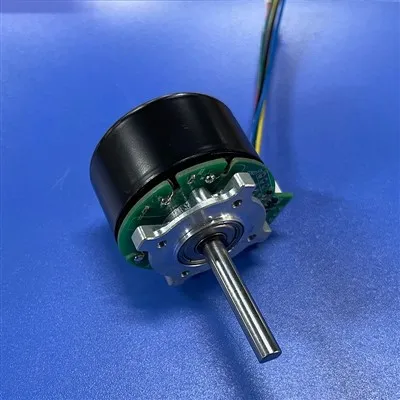
In summary, the back – EMF of an inrunner brushless motor is a fundamental concept that has a profound impact on the motor’s performance, efficiency, and reliability. Understanding back – EMF is essential for engineers, hobbyists, and businesses looking to use inrunner brushless motors in their applications.
Outrunner Brushless Motor As a supplier of inrunner brushless motors, I’m committed to providing high – quality products with well – designed back – EMF characteristics. Whether you’re working on a small hobby project or a large – scale industrial application, I can help you select the right motor for your needs. If you’re interested in learning more about our inrunner brushless motors or would like to discuss a potential purchase, please feel free to contact me. I look forward to working with you to find the perfect motor solution for your application.
References
- "Electric Machinery Fundamentals" by Stephen J. Chapman
- "Brushless Permanent – Magnet Motor Design" by Ned Mohan
Shenzhen HengDrive Technologies Co., Ltd.
Shenzhen HengDrive Technologies Co., Ltd. is one of the most professional inrunner brushless motor manufacturers and suppliers in China, specialized in providing high quality customized service. We warmly welcome you to buy the newest inrunner brushless motor in stock here from our factory.
Address: Building A & F, FuNing Hi-Tech Park, XinTian Road, FuHai Street, BaoAn District, ShenZhen, GuangDong Province, China.
E-mail: Marketing001@hengdrive.com
WebSite: https://www.hengdrivemotor.com/
