If you’ve ever walked a well-maintained playground, driven on a road with stable guardrails, or even fished in a lake with a robust mesh screen keeping invasive species out, chances are you’ve crossed paths with hexagonal mesh. For years, I’ve supplied this material—raw woven or welded steel, aluminum, even polymer variants—to construction teams, landscape architects, and environmental specialists across North America, and one question comes up at least once a week: “What actual industry standards govern this stuff?” Too many buyers assume hexagonal mesh is a one-size-fits-all product, but spend a decade in this trade, and you’ll see firsthand that a mesh perfect for a backyard garden won’t hold up on a highway slope, and a mesh used for sediment control can’t double as a bird barrier without failing. Today, I’m breaking down the core industry standards my team and I rely on to ship products that don’t just fit a spec—they do the job they’re designed for. Hexagonal Mesh

Let’s start with the most fundamental divide in hexagonal mesh: how it’s made. There are two primary manufacturing methods—woven and welded—and each has its own set of standards, because their structural properties are night and day. Woven hexagonal mesh, the traditional type that looks like a chain-link fence’s simpler cousin, is created by interlacing individual wires in a spiral pattern, so every wire connects to its neighbor but not permanently fused. Welded hexagonal mesh, by contrast, has every wire intersection spot-welded, creating a rigid grid that doesn’t shift under pressure. The two can’t be regulated by the same rules, because woven mesh flexes while welded mesh bends. That’s a key point I drive home to new clients—cutting corners on manufacturing standards is where most failures start.
For woven hexagonal mesh, the main governing bodies are the American Society for Testing and Materials (ASTM) and the International Organization for Standardization (ISO). The standard I reference daily is ASTM A975, which lays out every requirement for steel wire woven into hexagonal mesh for structural applications like slope stabilization or retaining walls. That standard doesn’t just say “make hex mesh”—it specifies wire thickness tolerance, mesh opening size, tensile strength, and coating quality. Let’s talk about wire gauge first, because it’s not arbitrary. ASTM A975 requires that the wire used for structural woven mesh have a diameter tolerance of +/- 0.005 inches. For a 10-gauge wire, that means it can’t be 0.1345 inches or 0.1245 inches; it has to land exactly within that range. Too thin, and the mesh will snap under pressure; too thick, and it’s unnecessarily heavy and costly.
Then there’s mesh opening size. Again, ASTM A975 sets clear limits: for standard slope stabilization mesh, the opening (the space between the wires) has to measure between 2 inches and 6 inches, with a tolerance of +/- 1/8 inch. That might sound trivial, but for engineers designing a slope that needs to support soil and rocks, a 1-inch opening too big would let small rocks slip through, while a 1-inch opening too small would require more wire than necessary, driving up costs without adding strength. For woven mesh used in non-structural applications, like garden fencing or poultry netting, ASTM A1006 is the go-to standard, which relaxes some tolerance requirements because those applications don’t carry heavy loads. I always make sure to ask clients whether their mesh is for structural or light use before quoting, because mixing these two standards is a common mistake that leads to returns.
Now, welded hexagonal mesh—more common in agricultural applications, animal enclosures, and temporary erosion control—has its own set of standards, primarily from ASTM A185 for welded steel wire reinforcement and ASTM A497 for welded wire fabric. Wait, but welded hexagonal mesh isn’t the same as the square wire fabric those standards usually reference, right? Correct, so there’s a secondary standard I rely on for this: ASTM F1185, which specifically covers welded hexagonal mesh for sediment control. This standard is critical because sediment control mesh needs to let water pass through but catch soil particles, so opening size and weld strength are non-negotiable. ASTM F1185 requires that each weld hold a minimum tensile strength of 1,000 pounds, which means the mesh won’t come apart when exposed to rain, wind, or even light equipment movement on a construction site. I test every batch of welded mesh I ship by pulling a 6-inch section until the weld fails, just to make sure we’re hitting that mark—skipping that test once led to a batch of mesh that pulled apart during a storm, and that’s a mistake I never want to repeat.
Coating is another huge part of industry standards, because hexagonal mesh that rusts is useless long-term, no matter how well it’s woven or welded. The two most common coatings are galvanized steel and PVC, and each has strict specifications. For galvanized mesh, ASTM A123 is the standard for zinc coating, which requires a minimum zinc weight per square foot based on wire thickness. For example, a 12-gauge galvanized structural mesh needs a minimum zinc coating of 0.9 ounces per square foot, while a thicker 6-gauge mesh needs 1.5 ounces. Too little zinc, and the mesh will corrode within 5 years; too much, and the coating can flake off during manufacturing, weakening the wire. For PVC-coated mesh, used for playground equipment or animal enclosures where rust and sharp edges are a hazard, ASTM D1784 governs the PVC itself, requiring that the coating be at least 10 mils thick and resistant to UV radiation, so it doesn’t crack or fade after years of sun exposure. I once had a client bring back mesh that cracked after a year of outdoor use, and it turned out their supplier used mesh coated with a 5-mil PVC that didn’t meet ASTM D1784. That’s why I never skip sharing full test reports with clients—they can see exactly what standards our coating meets.
Beyond American standards, if I’m shipping hexagonal mesh internationally, ISO 1035 is the global standard for hexagonal wire mesh, which aligns closely with ASTM specs but has slight variations in measurement tolerance for markets outside the U.S. I work with a lot of international construction teams that prefer ISO standards for consistency across projects, so my team keeps dual-certified batches on hand to avoid delays. It’s worth noting that there are no universal “world standards” for hexagonal mesh, but ISO has done a lot to reduce confusion between regional specs. For example, ISO 1035 specifies mesh opening in millimeters rather than inches, so I always provide both measurements to foreign clients to prevent ordering mistakes.
One area that’s less talked about but equally important is application-specific standards from organizations like the Federal Highway Administration (FHWA) and the Environmental Protection Agency (EPA). If a client needs hexagonal mesh for highway slope stabilization, FHWA Standard FP-2 says the mesh must meet ASTM A975 requirements and also have a minimum breaking strength of 5,000 pounds per linear foot. For sediment control mesh used in construction sites regulated by the EPA, the mesh has to meet ASTM F1185 and also be capable of retaining 90% of soil particles larger than 0.01 inches—no exceptions. I had a client a few years ago who needed mesh for a highway project and tried to use a cheaper batch that didn’t meet FHWA specs, and we had to turn down the order because we didn’t want to be part of a project that could fail inspection. It’s better to lose a small order than damage my reputation with regulatory teams.
Now, let’s talk about what standards don’t cover, because that’s where a lot of new suppliers cut corners. Standards set minimum requirements, not optimal ones. For example, ASTM A975 says a woven mesh needs a tensile strength of at least 40,000 psi, but we ship mesh with a tensile strength of 50,000 psi because we know that extra 10,000 psi makes a big difference when a slope is exposed to heavy rain or ice. Standards also don’t account for custom sizes, which is why we work with clients to adjust mesh dimensions within ASTM limits for their specific needs. A farmer might need a hexagonal mesh with 4-inch openings to keep chickens in, while a landscaper might need 2-inch openings to keep small birds out—both can meet ASTM specs, but custom sizing is what makes them useful.
I’ve spent 12 years in this hexagonal mesh trade, and I’ve seen firsthand how cutting corners on standards leads to costly failures. A construction company that saved $2,000 on non-compliant mesh ended up spending $20,000 repairing a slope that collapsed during a storm. A playground that used cheap, non-galvanized mesh had to replace it after 3 years because of rust, leading to safety concerns. That’s why my team prioritizes transparency with standards: every product we ship comes with a test report showing which ASTM or ISO specs it meets, and we’re upfront if a client’s needs fall outside standard requirements.
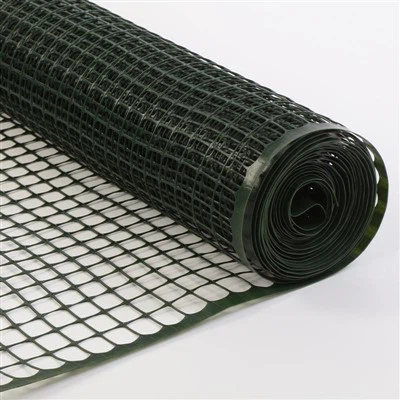
At the end of the day, hexagonal mesh standards aren’t just arbitrary rules—they’re guardrails that ensure the product works as intended, no matter where or how it’s used. Whether you’re a contractor, landscaper, farmer, or engineer, knowing which standards apply to your project will save you time, money, and frustration down the line. If you’re currently working on a project that needs hexagonal mesh and you want to make sure you’re getting a product that meets all the right industry specs, feel free to reach out to my team. We’ll walk you through the standards that apply to your use case, share our test reports, and ship products that are built to last.
Safety Fence References
ASTM A975, Standard Specification for Steel Wire, Woven, for Structural Hexagonal Mesh, 2022
ASTM A1006, Standard Specification for Steel Woven Wire Mesh for General Purpose Applications, 2021
ASTM F1185, Standard Specification for Welded Hexagonal Mesh for Sediment Control, 2023
ASTM A123/A123M, Standard Specification for Zinc (Hot-Dip Galvanized) Coatings on Iron and Steel Products, 2022
ISO 1035, Woven Wire Mesh of Hexagonal Shape, 2019
Federal Highway Administration (FHWA) Standard FP-2, Slope Stabilization Design and Construction, 2020
U.S. Environmental Protection Agency (EPA) Construction General Permitch Specs for Sediment Control, 2021
Shaoxing Yongte Plastics Co., Ltd.
We are one of the most reliable hexagonal mesh manufacturers and suppliers in China, specialized in providing high quality customized products. We warmly welcome you to wholesale discount hexagonal mesh for sale here from our factory. Contact us for pricelist and free sample.
Address: INDUSTRIAL PARK, LIZHU TOWN, KEQIAO DISTRICT, SHAOXING CITY, ZHEJIANG PROVINCE
E-mail: support@sxxyongte.com.cn
WebSite: https://www.fenceplastic.com/
