Hey there! As a supplier of Dental Endo Motors, I’ve gotten tons of questions about how these nifty machines work. So, I thought I’d break it down in this blog post. Dental Endo Motor

Let’s start with the basics. A Dental Endo Motor is a crucial tool in endodontic procedures, which are all about treating the inside of the tooth. It’s used to rotate and control the endodontic files, making it easier for dentists to clean and shape the root canals.
The Core Components of a Dental Endo Motor
The control system of a Dental Endo Motor is made up of several key components. First off, there’s the motor itself. This is the powerhouse that drives the rotation of the endodontic files. Most modern Dental Endo Motors use brushless DC motors. Why? Well, they’re more efficient, have a longer lifespan, and can provide more precise control over the rotation speed.
Next, we have the control unit. This is like the brain of the Dental Endo Motor. It’s where the dentist can set all the parameters, such as the rotation speed, torque, and direction of rotation. The control unit is usually equipped with a user-friendly interface, often a digital display, that allows the dentist to easily input and adjust these settings.
There’s also the foot pedal. It might seem like a simple accessory, but it’s actually a vital part of the control system. The foot pedal gives the dentist hands-free control over the operation of the Dental Endo Motor. By pressing down on the foot pedal, the dentist can start, stop, and adjust the speed of the motor.
How the Control System Works
Now, let’s dive into how these components work together to make the Dental Endo Motor function. When the dentist turns on the Dental Endo Motor, the control unit initializes. It checks all the settings that were previously saved or sets them to default values.
The dentist then uses the control unit to set the desired rotation speed and torque. The rotation speed is measured in revolutions per minute (RPM), and it can vary depending on the type of endodontic procedure and the size of the root canal. For example, when working on a small, delicate root canal, a lower RPM might be used to avoid damaging the tooth.
Torque, on the other hand, is the amount of force that the motor applies to the endodontic file. It’s important to set the right torque because if it’s too high, the file could break inside the root canal. If it’s too low, the file might not be able to effectively clean and shape the canal.
Once the settings are set, the dentist can use the foot pedal to start the motor. When the foot pedal is pressed, an electrical signal is sent to the control unit. The control unit then sends a signal to the motor, telling it to start rotating at the set speed and torque.
As the motor rotates, it drives the endodontic file. The file is attached to the handpiece, which is connected to the motor. The handpiece is designed to hold the file securely and transfer the rotation from the motor to the file.
During the procedure, the dentist can adjust the speed and torque using the control unit or the foot pedal. For example, if the dentist encounters a particularly tough area in the root canal, they might increase the torque to help the file cut through the tissue.
Safety Features in the Control System
Safety is a top priority when it comes to Dental Endo Motors. That’s why the control system is equipped with several safety features. One of the most important safety features is the torque limiter. The torque limiter is designed to prevent the file from breaking by automatically stopping the motor if the torque exceeds a certain limit.
Another safety feature is the reverse function. If the file gets stuck in the root canal, the dentist can use the reverse function to back the file out. This helps to prevent the file from breaking and makes it easier to remove the file from the canal.
Some Dental Endo Motors also have a built-in sensor that can detect if the file is in contact with the tooth. This helps to prevent the motor from running when the file is not in use, which can save energy and reduce wear and tear on the motor.
Benefits of a Well-Designed Control System
A well-designed control system in a Dental Endo Motor offers several benefits. First of all, it provides precise control over the rotation speed and torque, which is essential for successful endodontic procedures. This precision allows the dentist to clean and shape the root canals more effectively, leading to better treatment outcomes.
Secondly, the safety features in the control system help to protect the patient and the dentist. By preventing the file from breaking and providing a way to remove a stuck file, the control system reduces the risk of complications during the procedure.
Finally, a user-friendly control system makes it easier for dentists to operate the Dental Endo Motor. The digital display and intuitive interface allow dentists to quickly and easily set the parameters, which can save time during the procedure.
Why Choose Our Dental Endo Motors
As a supplier of Dental Endo Motors, we take pride in offering high-quality products with advanced control systems. Our Dental Endo Motors are designed with the latest technology to provide precise control, safety, and ease of use.
We understand that every dentist has different needs, which is why our Dental Endo Motors come with a wide range of customizable settings. Whether you’re working on a simple root canal or a complex endodontic procedure, our Dental Endo Motors can be adjusted to meet your specific requirements.
In addition, our customer support team is always available to answer any questions you might have about our Dental Endo Motors. We’re committed to providing the best possible service to our customers, and we want to make sure that you’re completely satisfied with your purchase.
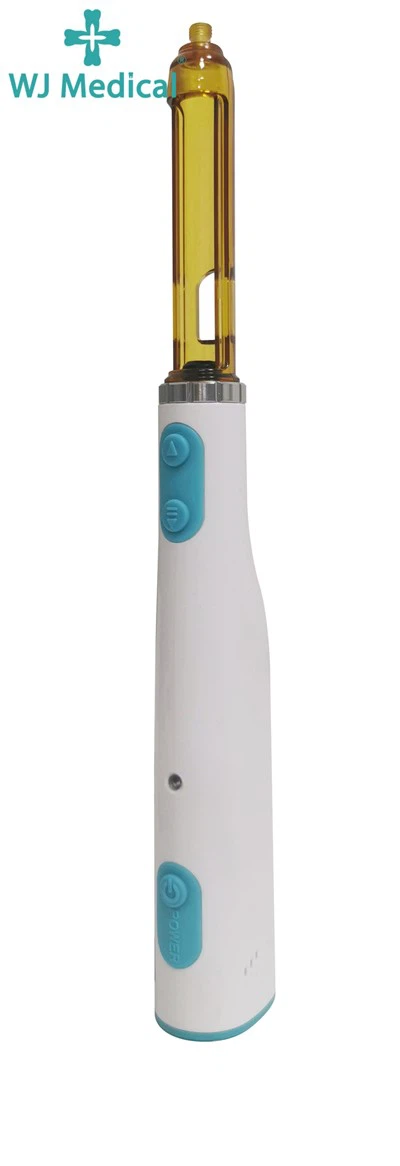
If you’re in the market for a Dental Endo Motor, I encourage you to reach out to us. We’d love to discuss your needs and help you find the perfect Dental Endo Motor for your practice. Whether you’re a small dental clinic or a large dental hospital, we have the right solution for you.
References
- "Endodontics: Principles and Practice" by Richard S. Custer, Jr. and Stephen T. Malamed
- "Textbook of Endodontics" by N. R. Narayana Kurup and M. C. Nambiar
Dental Endo Motor So, there you have it! That’s how the control system of a Dental Endo Motor works. If you have any questions or want to learn more about our Dental Endo Motors, don’t hesitate to get in touch. We’re here to help you take your endodontic procedures to the next level.
Foshan Wenjian Medical Instrument Co., Ltd.
Foshan Wenjian Medical Instrument Co., Ltd. is one of the most professional dental endo motor manufacturers and suppliers in China, featured by supplying high quality medical devices. Welcome to wholesale dental endo motor at competitive price from our factory. For more company information, contact us now.
Address: Workshop A, Sanyi Logistics, Shishan Town, Nanhai District, Foshan City, Guangdong Province, China
E-mail: Sales24@wenjian88.com
WebSite: https://www.chinaywjmed.com/
