If you’ve ever stood on a crowded subway platform watching a train glide silently into the station, or loaded boxes onto a warehouse conveyor system that moves them perfectly aligned every time, you’ve experienced the work of a well-engineered industrial belt guide rail drive module. As a supplier who’s spent 12 years designing, building, and troubleshooting these systems for manufacturing lines, packaging facilities, and automated material handling sites, I’m often asked a single question: how do these modules keep movement so smooth, even when they’re pushing heavy loads, running 12-hour shifts, or operating in dusty, hot environments? The short answer is that smooth movement isn’t an accident—it’s the result of precision engineering at every single point where the module touches a load, a motor, or its own frame. Today, I want to walk through exactly how that works, from the hidden components inside the module to the small, intentional choices we make that separate a module that runs for months without a hitch from one that gets stuck, vibrates, or wears out too fast. Industrial Belt Guide Rail Drive Module

Let’s start with the part that most people see first: the guide rail itself. This isn’t just a long metal bar cut to length—most of the modules we supply use high-grade carbon steel or aluminum alloy guide rails, but the key is how we finish their contact surfaces. Early on in my career, I worked with a customer who installed a cheap, un-finished guide rail and found that their heavy pallet jacks would jerk every few feet, damaging the goods and scaring their operators. When we swapped in our precision-ground guide rail, the jerking stopped immediately. That’s because the guide rail’s running surface has a flatness tolerance of less than 0.02 millimeters per meter—so there are no dips, burrs, or uneven spots that would catch the guide carriage as it moves. We also add a hard chrome plating to steel guide rails, or anodized coating to aluminum, to resist wear from friction and corrosion from cleaning chemicals or outdoor dust. What most people don’t realize is that even the tiny, deliberate grooves we mill into the guide rail’s side—called lubrication channels—play a huge role in smooth movement. These channels aren’t random; they’re placed exactly where the carriage’s seal wipers sit, so they evenly distribute a thin layer of oil or grease across the entire contact surface, instead of letting it pool in one spot or dry out in another. That consistent lubrication eliminates the metal-on-metal friction that’s the number one cause of jerky movement.
Next, the guide carriage and its roller or ball assemblies. This is the heart of the module, and it’s where the magic of smooth movement really happens. The carriage rides on four sets of precision rollers (for heavy-duty modules) or recirculating ball bearings (for lighter loads), each held in a cage made of reinforced nylon. Wait, you might be thinking—why not just use loose bearings? Because loose bearings can shift, wear unevenly, and create tiny gaps that cause vibration. The nylon cage holds each bearing perfectly in place, so every single rolling element makes contact with the guide rail at exactly the right angle. For our heavy-duty modules, we design the rollers to have a crowned surface—meaning they’re slightly curved along their length, not perfectly cylindrical. That might sound unnecessary, but if a roller was flat, the edges would bear all the load when the carriage is carrying a heavy weight, which would create uneven friction and cause the carriage to pull to one side. The crowned roller distributes load evenly across the entire surface of the roller, keeping movement straight and smooth even when carrying a load that’s 10 times the module’s own weight. We also test every carriage assembly on a custom rig that measures friction at every point along the guide rail. If two adjacent rollers have a friction difference of more than 5%, we send them back for adjustment—no exceptions. That level of strictness is why our modules don’t get that “stuttering” movement that’s common with lower-quality competitors.
Then there’s the drive system, which is what actually moves the carriage along the guide rail. Most industrial belt guide rail modules use a synchronous toothed belt drive, not a friction belt or a chain. A friction belt would slip when carrying a heavy load, and a chain has links that wear over time, creating play that causes jerks. The synchronous belt has molded teeth that lock into matching sprockets on the drive and idler pulleys, so every movement is exactly controlled, no slipping, no play. But even the best belt can cause smooth movement issues if it’s not tensioned correctly. We’ve seen customers who over-tension their belts, thinking it will make movement more stable—but over-tensioning creates extra friction in the belt and pulleys, leading to premature wear and vibration. Under-tensioning, on the other hand, lets the belt slip and create gaps between movement steps. That’s why we include a precision tensioning adjustment mechanism on every module we supply—usually a bolt that lets the idler pulley move exactly 0.5 millimeters, which is the ideal tension for most applications. We also use a polyurethane belt instead of rubber, because polyurethane is more resistant to stretching, so it holds tension longer and resists wear from oil and dust.
Now, let’s talk about the smaller, often overlooked components that add up to smooth movement. First, the sealing system. If dust, metal shavings, or moisture get inside the carriage and contact assemblies, they act like tiny abrasive particles, grinding away at the rollers and bearings, leading to uneven friction and rough movement within weeks. That’s why every one of our modules has double-seal wipers on both sides of the carriage. The outer wiper is a rigid rubber that wipes away large debris, while the inner wiper is a soft, lip-style seal that blocks fine dust and keeps lubrication in. For applications in super dusty environments, like sawmills or construction sites, we add a third secondary seal—all of our seals are tested to keep out 99.9% of particles as small as 0.5 micrometers. Another small detail is the way we mount the module to the customer’s frame. A lot of suppliers just drill holes and let the module sit directly on the surface, but if the customer’s frame is even slightly warped, that will cause the guide rail to twist, leading to uneven carriage movement. That’s why we supply custom mounting shims with every module—thin, precision-cut metal pieces that let the customer adjust the guide rail’s alignment to within 0.1 millimeters along its entire length, no matter what their frame’s condition is. We also include an alignment tool to make this quick and easy, since we know most of our customers don’t have time to waste on installation troubleshooting.
Wait, I should also mention load balance, because that’s a common mistake I see new customers make. Even if the module is perfectly engineered, if a customer loads the carriage unevenly—like putting all the weight on one side—will cause the rollers on that side to bear too much load, while the other side doesn’t touch the rail at all, leading to jerky movement and wear. That’s why our technical team works with every customer during the quotation process to calculate the ideal load distribution, and we provide clear guidelines on maximum off-center load. For applications where customers need to move very large, irregular loads, we can design multi-carrier modules that are synchronized to move in perfect alignment, so even if one side has a slightly heavier load, the drive system adjusts automatically. We use a combination of optical encoders and load sensors to make that adjustment—small components that most customers don’t even see, but that eliminate the uneven movement that would otherwise happen.
I’ve spent enough years in this industry to know that even the best engineering can go wrong if it’s not paired with proper maintenance, which is why we also include guidance on lubrication and care with every module. A common misconception is that once a module is installed, it never needs lubrication. But over time, lubrication breaks down, and new debris can get past the seals. We recommend using a lithium-based grease for most applications, applied with a grease fitting on the carriage that releases a tiny amount of lubrication every time the carriage moves along the guide rail. We also warn customers against using generic lubricants from the hardware store—cheap lubricants can attract dust, which creates a grinding paste inside the carriage, leading to rough movement. We test all our recommended lubricants to make sure they reduce friction by 30% and resist breakdown for at least 6 months of continuous use, which is exactly what our customers need to keep their lines running without downtime.
Let me give you an example of a time this engineering made a real difference. A few years ago, a automotive parts manufacturer reached out to us because their old modules were causing 15 minutes of downtime every shift, as their robotic arms would get stuck while moving car door panels. These panels are heavy, unevenly balanced, and the plant environment had fine metal dust from stamping operations. They had tried three different module suppliers, all with the same result. When we installed our modules, aligned correctly, with our triple-seal system and crowned rollers, the downtime dropped to almost zero. When we went back to check after six months, their maintenance team told us the movement was still as smooth as the day we installed it—no jerks, no unusual noise, no wear on the door panels from uneven movement. That’s the kind of result that comes from paying attention to every single detail, not just the big parts of the module.
At the end of the day, a smooth-moving industrial belt guide rail drive module isn’t just about moving a load from point A to point B. It’s about preventing downtime, protecting expensive products, keeping workers safe, and reducing long-term maintenance costs. Every component—from the precision-ground guide rail to the tiny nylon bearing cage, from the tension adjustment bolt to the seal wipers—works together to eliminate friction, alignment issues, and wear. If you’re tired of modules that jam, vibrate, or wear out too fast, or if you’re looking for a system that can handle heavy loads, dusty environments, or high-speed operation with consistent smooth movement, we’re here to help. Our team can work with you to design a custom module for your specific application, provide installation guidance, and offer ongoing support to make sure your system runs as smoothly as it should.
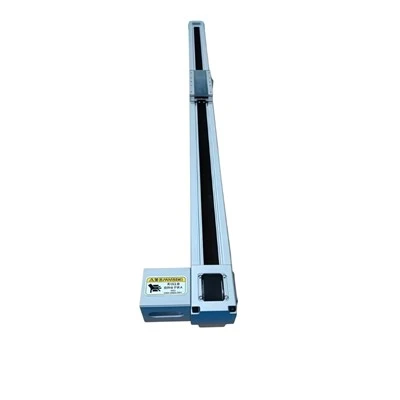
If you’re ready to discuss your needs, connect with our team to learn more about how our industrial belt guide rail drive modules can keep your operations moving reliably.
Automatic Production Line for Magnetic Latching Relays References:
- Standards Canada. (2021). Precision Linear Motion Systems: Guide Rail and Carriage Performance Specifications. Canadian General Standards Board.
- Meriam, J. L., & Kraige, L. G. (2020). Engineering Mechanics: Dynamics (9th ed.). John Wiley & Sons.
- The American Society of Mechanical Engineers (ASME). (2019). Design of Linear Motion Components for Industrial Applications. ASME International.
- Industrial Lubrication and Maintenance Institute. (2022). Guide to Linear System Lubrication for Heavy-Duty Industrial Environments. ILMI Publications.
Yangning (Xiamen) Intelligent Technology Co., Ltd.
With abundant experience, we are one of the most professional industrial belt guide rail drive module manufacturers in China. As we have world-leading production equipment and strong manufacturing capabilities, we warmly welcome you to buy bulk advanced industrial belt guide rail drive module from our factory. Customized orders are welcome.
Address: Room 307-2, No. 15 Duiying Road, Software Park Phase III, Torch Hi-Tech Zone, Xiamen, Fujian, China
E-mail: mia@ynautos.com
WebSite: https://www.ynautos.com/
