If you’ve ever wandered into a telecom room, a network operations center, or even a small enterprise data closet, you’ve probably spotted rows of neatly racked hardware: switch chassis, power distribution units (PDUs), signal amplifiers, and the little parts that hold it all together. For years, the go-to connection pitch for many of these applications was something like 2.54mm or 5.08mm—but lately, I’ve gotten more questions from design engineers and procurement teams: “Can 3.96mm pitch really work in communication equipment?” 3.96mm Pitch
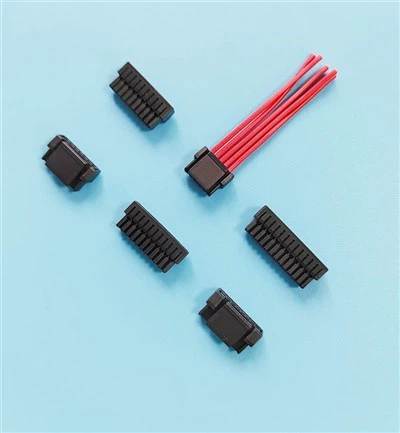
As the owner of a company that’s specialized in 3.96mm pitch connectors and terminal blocks for over a decade, I get why this question comes up. A lot of people associate smaller pitches with modern tech, and larger pitches with heavy-duty industrial or telecom use. But 3.96mm isn’t a middle-of-the-road afterthought—it’s a well-established, versatile solution that’s found a surprising home in communication gear, and one we supply to more than a dozen global telecom and network hardware brands right now. Let’s break this down, not with tech jargon that sounds like a textbook, but with real-world lessons from our customers and years of on-the-ground experience.
First, let’s talk about what “pitch” actually means here, because it’s easy to mix up. Pitch is the distance between the center of one connector pin or terminal to the next. 3.96mm works out to about 0.156 inches, so it’s a step up from the tiny 1.27mm connectors used in laptops and mobile devices, and a step down from the 5.08mm (0.2-inch) connectors often used in high-power industrial panels. The confusion starts because when people think of communication equipment, they often picture the very high-density, high-speed connections used in core network routers or 5G small cell radios—those use pitches as small as 0.5mm or 1.0mm, so why would anyone pick a larger 3.96mm pitch?
The answer lies in the different layers of communication infrastructure. Not every part of a telecom network needs terabits per second of throughput, and not every connection is a high-speed data line. A lot of critical, often overlooked connections in communication gear are for low-voltage, low-current signals and power delivery. Think about the temperature sensors that monitor a router’s internal components, the small DC power modules that run network interface cards (NICs), the signal LEDs that let technicians see at a glance if a port is active, or the emergency shutdown switches for a PDU. These aren’t core data paths, but they’re just as important—if they fail, the whole system goes down.
Last year, we worked with a mid-sized 5G infrastructure manufacturer that was redesigning their base station’s front-end panel. They’d been using 5.08mm pitch terminal blocks for all their auxiliary connections, but they kept running into two issues: overcrowding on the panel (the 5.08mm parts took up too much space, forcing them to shrink their other components), and higher assembly costs because their technicians were making wiring errors with the larger, bulkier connectors. They switched to 3.96mm pitch for all the auxiliary lines, and within six months, their production line error rate dropped by 22%, and they were able to fit 30% more components on each front panel. That’s the kind of real win that doesn’t make trade magazines, but makes a big difference for manufacturers’ bottom lines.
Now, let’s address the elephant in the room: is 3.96mm pitch reliable enough for communication equipment? A decade ago, that might have been a valid question. Back then, some lower-quality 3.96mm parts on the market used cheap plating or flimsy plastic housings that couldn’t handle the vibration, temperature swings, or humidity that telecom equipment is exposed to. But today, the standard for 3.96mm pitch connectors has evolved a lot, and the products we supply meet all the key telecom industry standards.
Our 3.96mm parts, for example, use tin-plated copper alloy pins for consistent conductivity, and housing materials that are UL 94 V-0 rated—meaning they’re fire-resistant, a non-negotiable for any equipment that gets racked in a closed telecom room. They also pass IP20 ingress protection, which blocks dust and accidental touch, perfect for indoor network gear. We’ve tested them to withstand temperature ranges from -40°C to 125°C, which covers everything from data centers in Phoenix to base stations in northern Europe. And vibration tests? We’ve run them through 10-2000 Hz vibration cycles at 20g, which is more than the standard requirement for telecom equipment, and they haven’t had a single electrical failure.
Another big advantage of 3.96mm pitch for communication gear is flexibility. A lot of our customers love that the terminals are pluggable—meaning you can connect or disconnect wires without soldering, which is a huge help during field maintenance. When a telecom technician has to swap out a faulty sensor or replace a power module in a base station, they don’t want to have to heat up a soldering iron in a hot, dusty cell tower. With 3.96mm pluggable connectors, they can just pull the old one and push the new one in with a screwdriver, no special tools needed. That cuts down on maintenance time, which means less downtime for the network—something every communication provider cares about.
Let’s also talk about power handling, because that’s another common point of confusion. Some people assume a larger pitch means higher current, and while that’s true in general, 3.96mm pitch is more than capable of handling the low to moderate power loads that most auxiliary communication connections need. Each terminal in our 3.96mm line is rated for up to 10A, which is enough for sensors, LED indicators, small DC-DC modules, and even low-power signal amplifiers. For higher-power applications, you can use a 3.96mm connector with multiple parallel terminals to spread the current, instead of stepping up to a larger pitch. That flexibility means you don’t have to redesign your entire wiring harness every time you need a small power adjustment.
Of course, that’s not to say 3.96mm pitch is right for every part of communication equipment. If you’re designing the high-speed data ports on a core router, or the antenna connections for a mmWave 5G radio, a smaller pitch with higher bandwidth is the way to go. But for the vast majority of auxiliary connections in communication gear—power, signals, status monitoring, and control—3.96mm pitch is more than sufficient, and it often offers real benefits over larger or smaller alternatives.
Over the years, we’ve also seen how design engineers have started to see this, not just as a secondary option, but as a smart standard. A few years ago, 3.96mm was mostly used in industrial automation and consumer electronics. Now, our biggest growth segment is telecom and network hardware. We supply parts to a major US-based data center provider for their PDU monitoring systems, to a European 5G vendor for their remote radio head wiring, and to a network equipment manufacturer in Asia for their rack-mounted switch auxiliary panels. All of them started with a small trial, then scaled up because of the reliability, cost savings, and space benefits we talked about.
One of the most common misconceptions we still hear is that 3.96mm pitch is outdated, or that newer pitches have replaced it. In reality, standardization has been a big win for 3.96mm. It’s a widely adopted pitch, which means that wiring harnesses, tools, and replacement parts are readily available almost anywhere in the world. For communication providers that have a global network with base stations and data centers in dozens of countries, that accessibility is huge. You don’t want to have to source a special, custom connector for a remote base station in the mountains of Peru, because that would delay maintenance and cost a lot more. With 3.96mm, you can order standard parts from local suppliers, or carry spares that work across all your sites.
Another point that comes up is assembly cost. When you’re building thousands or millions of units of communication equipment, every small cost adds up. 3.96mm pitch connectors are simpler to design around than ultra-small pitches, which means less time spent routing wires on the PCB, fewer errors during assembly, and lower training costs for line workers. We’ve had customers tell us that switching from 5.08mm to 3.96mm for auxiliary connections cut their total part and labor costs by around 15% over the product lifecycle, because they could use cheaper wiring harnesses and had fewer rejects during production.
I know a lot of engineers are wary of adopting a connector type that’s not widely seen as “telecom-grade,” but I’ve seen 3.96mm hold up in some tough environments. Last year, we sent a batch of our 3.96mm connectors to a customer that installs communication gear in remote oil and gas facilities—places where the equipment is exposed to high humidity, dust, and occasional vibration from heavy machinery. They ran a six-month field test, and reported that not a single connector had failed, compared to a 3% failure rate with their previous 5.08mm parts. That’s the kind of real-world performance you can’t get from a datasheet alone.
Of course, no connector is perfect. 3.96mm isn’t the right choice for high-speed data, as I mentioned before. It’s also not ideal for very high-power loads over 10A, though as I said, you can parallel terminals if needed. But for the role it’s designed for—auxiliary power, low-speed control signals, status monitoring, and user-facing connections—its strengths far outweigh its limitations.
If you’re a design engineer, procurement manager, or product developer working on communication equipment and you’re weighing your connector options, I encourage you to take a closer look at 3.96mm pitch. It’s not a niche solution for industrial equipment anymore; it’s a proven, reliable, cost-effective standard that’s being used in everything from small office network switches to 5G base stations. We’ve been in this business long enough to know that the best connectors aren’t always the newest or smallest ones—they’re the ones that match your application’s needs, save you time and money, and stand up to the real conditions your gear will face.

If you’re evaluating connector solutions for your communication equipment, we’d be happy to share more data, sample parts, or discuss custom configurations tailored to your project. Whether you’re redesigning an existing product or developing a new line of telecom gear, our team has the experience to help you choose the right connector type for every part of your system. Reach out to our procurement team to start a conversation about your project needs.
3.00mm Pitch References
- International Electrotechnical Commission (IEC) 60947-7-1: 2020, Low-voltage switchgear and controlgear – Part 7-1: Additional requirements for terminal blocks for copper conductors
- Underwriters Laboratories (UL) 1059: 2021, Standard for Safety for Terminal Blocks and Connectors
- Telecommunications Industry Association (TIA) TIA-968-A: 2018, Generic Requirements for Connector Systems for Use in Telecommunications and Signaling Applications
- IP Code (IEC 60529:2017), Degrees of Protection Provided by Enclosures
Dongguan Yinglian Electronics Co., Ltd.
We’re well-known as one of the most professional 3.96mm pitch suppliers in China. With abundant experience, we warmly welcome you to buy bulk advanced 3.96mm pitch made in China here from our factory. If you have any enquiry about cooperation, please feel free to email us.
Address:
E-mail: James@csg-china.com
WebSite: https://www.csgconn.com/
