If you’re deep in the steel ball skew rolling game, you already know that every tiny part of your mill pulls its weight—nothing’s just “there” for show. But let’s be real: most folks fixate on the main roll stand or the heating furnace, and sleep on the transmission system. That’s where I come in. I’ve been supplying steel ball skew rolling mills for over 12 years, and I’ve seen first-hand how a junk transmission can turn a $5k order into a $20k headache (not to mention the downtime that kills your production schedule). Today, I’m breaking down exactly what that transmission system does, why it’s not an afterthought, and why it’s non-negotiable when you’re picking a mill that actually delivers. Steel Ball Skew Rolling Mill
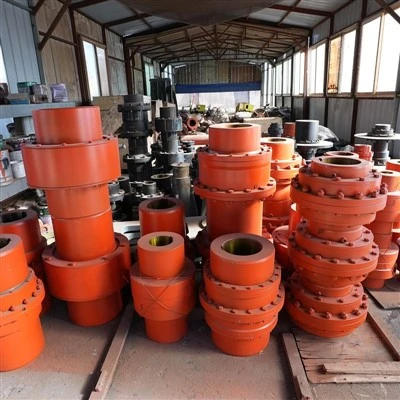
First off, let’s keep this plain: the transmission is the middleman between your mill’s power source (that big electric motor you’re relying on for torque) and the roll pairs that actually shape raw steel into balls. But it’s way more than just “passing power along.” If you’ve ever watched a skew rolling mill run, you’ll notice the two main rolls spin in opposite directions, at super specific speeds, and with zero weird jerking motions. That’s not luck—that’s the transmission’s job. Let’s break down its core roles, because skipping over any one of these will tank your ball quality faster than a cold press on hot steel.
Number one: torque adaptation, plain and simple. Skew rolling isn’t like bending a pipe. You’re taking a raw steel rod, heating it to around 1200°C, and forcing it between two tapered rolls that are angled just right (that’s the “skew” part, for the new folks). When that hot steel hits the rolls, it’s not sitting still—it’s being compressed, stretched, and pushed forward at the same time. The motor might crank out a ton of power, but if you don’t have a transmission that can dial that power up to just the right torque, you’ll get one of two garbage outcomes: either the rolls stall out (and you’re digging a stuck steel billet out at 2 a.m.), or you twist the ball so hard it’s out of round, which means it gets rejected before it even hits your finishing line. I see this all the time with mills that go for cheap transmissions: they match the motor’s max torque to the rolls, but don’t account for the variable load when the steel first makes contact. Good transmissions here have planetary gear sets or worm gears that can adjust torque on the fly—no more stalling, no more misshapen balls.
Second: synchronized rotation of the roll pairs. This is make-or-break. The two main rolls (and sometimes the guide rolls, depending on your mill model) have to spin at a precise ratio, and their rotation has to stay dead in sync. If one roll spins even 1% faster than the other, you’ll get a lopsided ball—one side thicker than the other, which makes it useless for bearings or grinding media. I once had a customer who bought a mill from a no-name supplier, and their transmission had a tiny gear misalignment. For the first 1000 balls, 15% were rejected. They lost $3k in materials alone and two days of production. When they swapped to a mill I supply, with a helical gear transmission calibrated to keep roll speed within 0.2% of each other, that rejection rate dropped to less than 1%. That’s the thing: the transmission doesn’t just spin the rolls—it keeps them working in lockstep. No sync, no good balls.
Third: speed control for different ball sizes. Here’s another pro tip: if you’re making steel balls for grinding media (think for mines or cement plants) vs. bearing balls, you can’t run the same speed. Smaller balls (like 20mm) need faster roll speeds, while bigger ones (150mm) need slower, more deliberate compression. The transmission is what lets you adjust speed without replacing parts. Cheap mills might have a fixed-speed transmission, so you’re stuck making only one ball size. But a good transmission has variable speed drives (VFDs) built in—wait, no, the transmission works with the VFD, right? Let’s clarify: the transmission handles the mechanical adjustment of gear ratios, and the VFD controls the motor speed. Together, they let you dial in exactly the right spin for every ball size. I’ve got a customer who does 5 different ball sizes for a quarry, and they can switch sizes in 15 minutes flat—no tearing apart the mill, just tweaking the transmission’s gear shift and the VFD. That’s how you keep production flexible, which is huge when you’re juggling multiple orders.
Wait, let’s talk about durability too, because that’s a big one for end-users. A lot of guys skip the transmission specs and just look at the motor size. But a motor is useless if the transmission wears out in 6 months. I’ve seen transmissions made with cast iron gears that crack after a year of heavy use, because skew rolling creates constant, heavy shock loads. Good transmissions use alloy steel gears, case-hardened to resist that shock. They also have lubrication systems that are sealed—no one wants to be changing transmission oil every 3 months, especially when your mill is running 16 hours a day. I supply mills with transmissions that have self-contained, pressurized lubrication, and we’ve had customers run them for 5 years without a transmission rebuild. That’s the kind of thing that adds to your bottom line, not takes away.
Let me also debunk a myth I hear all the time: “I can just upgrade the transmission later if it’s bad.” Yeah, maybe, but that’s a huge hassle. You’re already installing a new mill, so why add extra labor and downtime when you can get the transmission right the first time? I had a customer last year who tried a $12k mill with a cheap transmission, then spent $4k on a new transmission and $2k in labor to swap it out—total $18k, which is more than a mill with a good transmission would’ve cost them in the first place. Don’t fall for that trap. The transmission is a core component, not an add-on.
Now, let’s get practical about what to look for when you’re vetting a mill’s transmission. First, ask about the gear type: helical gears are way quieter and more durable than straight-cut gears for skew rolling. Straight-cut might work for small, light mills, but if you’re making 100mm+ balls, helical is non-negotiable. Second, check the sync accuracy—ask for a spec on roll speed variance. If it’s more than 0.5%, walk away. Third, look at the lubrication system: sealed, pressurized is better than splash lubrication, because splash doesn’t reach all the gear teeth under heavy load. Fourth, make sure the transmission can handle the variable load—there should be a torque overload protection feature, so if a stuck billet jams the rolls, the transmission will slip (or shut off) instead of blowing up the motor or breaking a gear.

I get it, when you’re in the market for a steel ball skew rolling mill, you’re focused on output, ball size range, and initial cost. But trust me, the transmission is the unsung hero that makes all those things actually work. A mill with a bad transmission might have a big motor and big rolls, but it’ll produce garbage, break down nonstop, and cost you way more in the long run.
Feeding & Conveying Equipment If you’re tired of dealing with mills that leave you scrambling to fix transmission issues, or if you’re ready to invest in a mill that runs smoothly, produces consistent balls, and keeps downtime to a minimum, reach out to talk through your needs. I’ve helped mines, cement plants, and bearing manufacturers pick the right mill setup, and I can walk you through exactly what transmission specs you need for your specific ball sizes and production volume. Don’t let a cheap transmission ruin your investment—let’s make sure you get the mill that works for you, no hidden headaches.
References
- Modern Steel Rolling Technology, 2nd Edition, Iron and Steel Institute of America, 2020
- Journal of Manufacturing Processes: "Skew Rolling of Steel Balls—Effect of Gear Train Alignment on Dimensional Accuracy", Vol. 38, 2019
- Industrial Transmission Systems for Metal Forming Equipment, Gear Technology Magazine, 2021
Shenyang Muren Machinery Co., Ltd.
As one of the most professional steel ball skew rolling mill manufacturers and suppliers in China, we’re featured by quality products and good price. Please rest assured to wholesale durable steel ball skew rolling mill from our factory. We also accept customized orders.
Address: No.16 Nansan Road, Shenyang Jinhai Economic Zone, Liaoning Province, China
E-mail: mulunjixie@163.com
WebSite: https://www.symurens.com/
