If you’ve ever had a vacuum cleaner cut out mid-clean, a dishwasher fail to spray dishes, or a clothes dryer stop tumbling, the chances are the issue traces back to a brushless DC (BLDC) motor. As a supplier of these components to appliance manufacturers and repair shops across the region, I field at least a dozen questions a week from homeowners and small repair technicians alike: Can my household appliance’s brushless motor be fixed, or do I need to replace it entirely? For too long, BLDC motors—once lauded for their long lifespan and low maintenance—have gotten a reputation as “throwaway parts,” with many repair shops writing them off after a quick diagnostic. But after 12 years working with these motors, I’m here to tell you that’s not always the case. A brushless motor isn’t a single, unrepairable unit—it’s a system of smaller, individual parts, and most common failures can be fixed, as long as you know what to look for. Household Appliance Brushless Motor
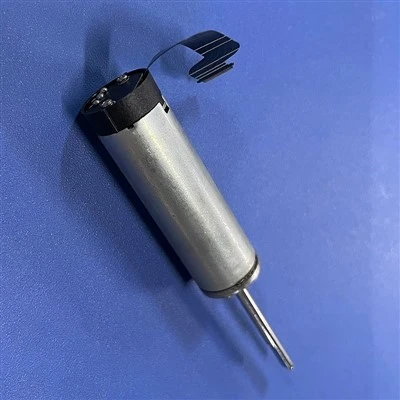
First, let’s get one thing straight: what makes a household BLDC motor different from the brushed motors your parents used? Brushed motors use physical carbon brushes that rub against a commutator to carry current to the rotor; those brushes wear down over time, hence the need for regular replacement. Brushless motors skip the brushes entirely, using a small external circuit board called an ESC (electronic speed controller) and a series of electromagnets on the stator (the stationary part of the motor) to spin the rotor via controlled, timed current pulses. That design cuts down on friction, noise, and wear, which is why BLDC motors last two to three times longer than brushed equivalents in appliances. But that doesn’t mean they never break—their complexity means they can fail in specific, fixable ways, not just “die suddenly.”
Over the years, I’ve seen hundreds of motors come back into our supply chain from repair shops, many of which were deemed “unfixable” only to have a $5 part bring them back to life. Let’s start with the most common failures, and what you can do about each. The number one issue we see is ESC failure. The ESC is the brain of the BLDC motor; it regulates voltage, adjusts speed, and controls the timing of the stator’s magnetic pulses. On small BLDC motors used in tabletop fans or handheld vacuums, the ESC is often a tiny, surface-mount circuit board tucked right into the motor housing. Common ESC problems include blown output transistors, corroded solder joints from moisture (think dishwashers or washing machines exposed to steam), or faulty Hall effect sensors. Hall effect sensors are the small components that tell the ESC where the rotor is at any given moment, so it can adjust the current correctly. Last year, a repair shop brought in 12 motor units from a line of countertop coffee grinders that kept grinding unevenly. Testing showed none of the stators or rotors were damaged—all 12 had a single faulty Hall effect sensor on their ESC. We supplied replacement sensors for under $2 each, and the motors were back in service in less than an hour. That’s a far cry from replacing the entire motor, which would have cost the homeowner 10 times that amount.
The next most common failure is bearing wear. Even though BLDC motors have no brushes, their rotor still spins on bearings, and those bearings will wear out over time, especially if the appliance is used heavily (like a vacuum cleaner that runs 4+ hours a week, or a dryer that cycles daily). A worn bearing will make a high-pitched squeal or grinding noise as the motor runs, and if left unaddressed, it can cause the rotor to rub against the stator, leading to permanent damage to the stator windings. The good news here is that replacing a motor’s bearings is straightforward, as long as you have basic hand tools and a little patience. For most household BLDC motors, the bearings are press-fit into the end bells of the motor; you just need to carefully remove the old bearing, clean the housing, and press a new, matching bearing into place. Important note: don’t skip cleaning the housing. Dirt and old bearing residue will cause the new bearing to wear out in a fraction of the time. I’ve seen a repair tech cut corners here, replace a bearing, and have the same failure two weeks later—don’t make that mistake.
Now, here’s the failure that most people think means the motor is totaled: stator winding damage. The stator is the series of copper wires wrapped around the motor’s inner core that creates the magnetic field to spin the rotor. Over time, these windings can short out, or insulation on the wires can fray from heat or vibration. For many years, I thought this was a dead-end failure, but in the last five years, we’ve seen a growing number of small repair companies offering stator rewinding services for household BLDC motors. That said, this is not a do-it-yourself project for most homeowners. Rewinding requires specialized equipment to measure and match the original wire gauge, and to make sure the winding is aligned correctly to avoid electrical imbalances. It’s also only cost-effective for mid-range appliances—you’re not going to rewind the stator on a $20 desk fan motor, because the labor will cost more than a new motor. But for a $500 washing machine’s main motor, rewinding can cut repair costs by 60% compared to replacement. That said, I always recommend testing first: a shorted stator will often show up as a spike in current draw when the motor is tested, so make sure it’s actually the winding before you commit to rewinding.
One failure we don’t see nearly as often, but that is still repairable, is rotor magnet damage. The rotor of a BLDC motor has permanent magnets, and while these magnets are strong, they can lose their magnetism (a process called demagnetization) if the motor is overheated—for example, if a dryer runs with a blocked vent, causing the motor to overheat, or a vacuum cleaner runs with a full clog for too long. Demagnetization leads to reduced motor power, so the appliance will run slower or struggle to do its job. In some cases, you can replace the rotor’s magnets, or even re-magnetize them with a specialized magnetizer (a tool many small motor repair shops own). Again, this is only worth it for higher-cost appliances; for a $100 vacuum motor, replacing the rotor isn’t cost-effective, but for a $1,000 dishwasher motor, it’s a great option.
Now, let’s talk about when a brushless motor isn’t worth repairing. I always tell repair technicians and homeowners to consider two factors before deciding to repair versus replace: cost of parts/labor versus cost of a new motor, and the age of the appliance. If your appliance is 10+ years old, and a new motor costs 70% or more of the cost of a replacement appliance, it’s almost always better to replace. Also, if the motor has sustained physical damage—like a cracked stator housing, or the rotor is bent from being dropped (if it’s a portable appliance like a power tool, though that’s not household appliance here)—there’s little chance of a successful repair, and the parts are often unavailable anyway.
As a BLDC motor supplier, I work with repair shops and manufacturers to get them both new replacement motors and affordable replacement parts for existing ones. What I see most is that homeowners and even some small repair techs don’t realize how many repairable issues there are with BLDC motors, so they jump to buying a new motor or even a new appliance. A few years back, I heard from a customer whose $800 clothes dryer’s motor was failing. The repair shop quoted her $650 for a new motor and installation, which was almost the cost of a new dryer. We had a local repair tech test it, find a faulty ESC board, supply a replacement ESC for $12, and that dryer was running like new for 10 more years. That’s the kind of win we love to see—avoiding waste, saving customers money, and extending the life of a perfectly good appliance.
If you’ve got a household appliance with a brushless motor that’s acting up, don’t assume it’s time to replace it. Start with simple diagnostics: listen for strange noises (bearing issue?), check for error codes (common on front-loading washers and dishwashers, which can point to ESC or sensor problems), and avoid running the appliance if it’s underperforming (that can cause more damage). For repairs that do require parts, we offer a range of OEM-grade components for household BLDC motors, from ESCs and Hall sensors to bearings and replacement rotors, at wholesale rates for repair shops and individual homeowners.

When it comes to household appliance brushless motors, the old mindset of “if it breaks, throw it away” is outdated. Most common failures are fixable with the right parts and a little know-how, saving you money and keeping perfectly good appliances out of landfills. If you’re in the market for parts to repair your brushless motor, or want to learn more about sourcing reliable components for commercial or residential repair needs, reach out to discuss your requirements and find the right solution for your project.
Brushless Dc Motor References
- “Brushless DC Motor Failure Modes & Reliability.” Electric Apparatus Service Association (EASA), 2021.
- “Household BLDC Motor Maintenance & Repair Guidelines.” Association of Home Appliance Manufacturers (AHAM), 2022.
- “Bearing Wear in Small Electric Motors: Causes & Mitigation.” Tribology Transactions, vol. 64, no. 3, 2021, pp. 489–497.
- “ESC Testing & Troubleshooting for Consumer Electronics BLDC Motors.” Institute of Electrical and Electronics Engineers (IEEE) Consumer Electronics Society, 2020.
Shenzhen HengDrive Technologies Co., Ltd.
Shenzhen HengDrive Technologies Co., Ltd. is one of the most professional household appliance brushless motor manufacturers and suppliers in China, specialized in providing high quality customized service. We warmly welcome you to buy the newest household appliance brushless motor in stock here from our factory.
Address: Building A & F, FuNing Hi-Tech Park, XinTian Road, FuHai Street, BaoAn District, ShenZhen, GuangDong Province, China.
E-mail: Marketing001@hengdrive.com
WebSite: https://www.hengdrivemotor.com/
