If you’ve ever spent any time on a worksite—whether it’s a cabinet shop, a metal fabrication plant, a grain processing facility, or even a small-scale construction zone—you’ve probably seen that one guy with a dust mask pulled down around his neck, squinting through a cloud of sawdust or metal shavings like it’s no big deal. I get it, I’ve been there too. Back when I first started working with dust collectors (full transparency, I run a supply company that specializes in these things), I used to think the same way: dust is just part of the job, right? Fast forward a decade later, and I’ve seen firsthand how a good dust collector doesn’t just make worksites cleaner—it’s the single biggest factor in keeping workers safe. Let’s break this down, no stuffy jargon, just real talk from someone who’s been in the thick of it. Dust Collector
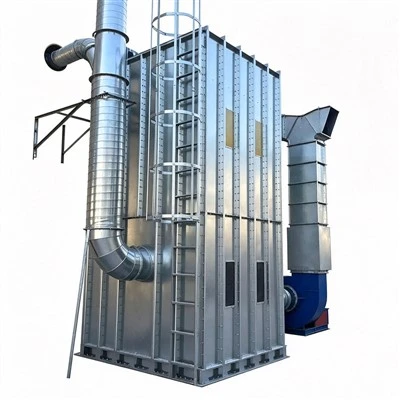
First off, let’s cut through the basic stuff we all know but brush off: airborne dust isn’t “just dust.” It’s a cocktail of tiny particles that get kicked up when you cut wood, grind metal, sand drywall, or process grain. Those particles are so small—like, way smaller than a grain of sand—that they don’t just float away. They hang in the air for hours, and when you breathe them in, they go deep into your lungs, not just the back of your throat. I’ve talked to a dozen workers over the years who ended up with chronic bronchitis or even something worse, like mesothelioma from asbestos dust that was stuck old construction materials. The scariest part? A lot of these conditions don’t show up for 10, 20, even 30 years. By the time you feel a cough or tight chest, the damage is already done. That’s where dust collectors step in. They don’t wait for you to inhale dust—they suck it up at the source, before it has a chance to become airborne. I’ve got a buddy who runs a small woodshop; he used to test his air quality once a year, and before he installed our cyclone-style dust collector, his shop’s respirable wood dust levels were 3x the OSHA limit. After two weeks? Down to 0.8x the limit. That’s not just a number— that’s him not waking up at 5 a.m. hacking up sawdust for the rest of his life.
Next, there’s the fire and explosion risk, which most worksites I’ve seen totally sleep on. Let’s talk about wood dust first—fine sawdust is way more flammable than you’d think. A friend of mine worked at a furniture factory a few years back; they had a spot where a dust collector filter got clogged, so they just turned off the alarm and kept going. One spark from a table saw landed in the dust buildup in the ductwork, and by the time the fire department got there, half the main shop was gone, and two guys got burned. Metal dust is even scarier—aluminum, magnesium, titanium dust? Those are explosive when they’re concentrated in a closed space like a duct or a dust collector bin. I remember a conference I went to a couple years ago where a rep from a metal fabrication plant talked about a near-miss: their dust collector’s spark detection system (we sell those too, fyi) caught a spark in the collector bin before it could ignite the 50 pounds of aluminum dust that had built up. If they didn’t have that dust collector pulling the dust away from the grinder, that spark would’ve gone straight to the grinder’s dust cloud, and no one would’ve walked away. Dust collectors don’t just clean air—they eliminate the fuel for these hidden explosions. You don’t have to take my word for it, OSHA has stats that say dust-related fires and explosions cause an average of 20 worker deaths a year in the US alone. That’s 20 families that never get to see their loved ones again, all because someone skipped out on a $1,500 dust collector to save a few bucks.
Now, let’s get real about the things I see every day that people get wrong about dust collectors. A lot of small business owners think, “Oh, a shop vac will do the same thing.” No, it won’t. Shop vacs are meant for small, quick cleanups, not continuous dust extraction. If you’re running a table saw for 8 hours a day, a shop vac will clog in 10 minutes, and then you’re just blowing dust around. I’ve had a customer who bought a cheap shop vac for his construction site sanding drywall; after a week, it broke, and he ended up with a sinus infection that kept him out of work for 3 weeks. A proper dust collector has larger filtration capacity, continuous airflow, and they’re designed to handle high volumes of dust without stopping. Another mistake: not maintaining the dust collector. I see this all the time—people ignore the filter changes or skip emptying the bin. But here’s the thing: a dirty dust collector is way worse than no dust collector at all. If the filter’s clogged, it can’t pull dust away, and all the particles that get stuck on the filter can get re-suspended when you run the unit. That’s why we send every customer a quick cheat sheet of maintenance steps—takes 5 minutes a week, and it saves your lungs and your worksite.
Wait, let’s talk about the mental side of worker safety, too. I know, I know—this is a blog about dust collectors, not therapy. But hear me out. When workers go to a job where it’s dusty as hell, they feel undervalued. They think, “My boss doesn’t care if I breathe this stuff.” That leads to more mistakes, right? If you’re frustrated by a worksite that makes you cough and itch your eyes all day, you’re more likely to skip a safety step, like wearing a mask, or rush through a job to get out of the dust. I’ve seen that play out so many times. A customer of ours runs a 20-person woodshop; before they installed our dust collectors, their turnover rate was 30% a year. Everyone complained about the dust, and half the guys would wear their masks under their noses so they could breathe easier. Now? Turnover is down to 5%, and they told us their workers are way more focused on the job, not just trying to get through the dust. That’s a safety win that doesn’t get talked about enough—when workers feel protected, they’re safer.
Let’s also address the elephant in the room: cost. I get it, a new dust collector is an investment, especially for small businesses. But let’s do the math. The average worker’s comp claim for a dust-related lung condition is over $100,000. That’s way more than the cost of a mid-sized dust collector, plus installation. Not to mention downtime—if someone gets injured or sick, you’re not just paying comp, you’re losing productivity. I had a customer a few years back who had a worker develop COPD from 15 years of wood dust exposure. He retired early, and the shop ended up paying $120,000 in medical bills and lost wages. He could’ve had a dust collector installed for $8,000 when he first started showing symptoms. That’s not a no-brainer—it’s a necessary expense. And now we have options for every budget, too. We have portable dust collectors for small shops, wall-mounted units for tight spaces, even cyclone units for high-volume worksites. You don’t have to drop a ton of cash to get safe.
Here’s another thing I love about dust collectors: they adapt to new jobs. When I first got into this, I thought dust collectors were just for woodworkers. Nope! We sell them to grain farmers, metal fabricators, construction crews that do concrete grinding, even pharmaceutical labs that handle fine powders. Each dust collector is tailored to the job—so a grain dust collector has explosion-proof parts, a wood dust collector has high-efficiency filters, a metal dust collector has spark detection. The point is, no matter what you’re working with, there’s a dust collector that can keep workers safe. I had a customer who does custom sign making—they work with vinyl, acrylic, and aluminum. They were using a small shop vac and had workers complaining about skin irritation and dust in their eyes. After we set them up with a portable dust collector that can handle all three materials, those complaints stopped, and their productivity went up because no one was stopping to blow dust out of their eyes every 15 minutes.
Now, let’s get back to the real people behind this. I’m not some corporate rep reading from a script. I’m a guy who used to work in a furniture shop after high school, making $12 an hour, breathing in sawdust so bad my throat would burn by the end of the day. I watched my uncle, who worked in a metal fab shop his whole life, develop lung disease at 52. That’s why I started this supply company—because I saw how easy it is to skip the small, necessary step that keeps people safe. A dust collector isn’t just a piece of equipment. It’s the thing that lets a worker go home to their kids, go camping on the weekends, not spend their retirement in a doctor’s office. That’s the impact I care about.
Let’s wrap this up. When someone asks me, “What’s the impact of a dust collector on worker safety?” I don’t talk about filtration rates or CFM (okay, maybe a little). I talk about the guy who doesn’t get a chronic cough when he turns 40. I talk about the worksite that doesn’t lose half its building to a dust explosion. I talk about workers who feel like their employer actually cares about their health, not just meeting a deadline. At the end of the day, worker safety isn’t a buzzword—it’s doing the small, smart things to keep people alive. And a good dust collector is one of the smartest, most impactful things you can add to your worksite.
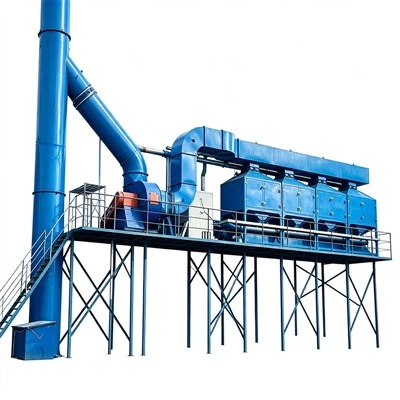
If you’re tired of watching your workers deal with dust, or you’re worried about fire risks on your site, or you just want to make your workplace safer, we can help. We don’t do one-size-fits-all solutions—we’ll walk through your worksite, listen to what you need, and point you to the dust collector that fits your budget and your job. No pressure, no sales pitch, just real advice from someone who’s been there. Reach out anytime to chat about your needs.
Grinding Table References:
- Occupational Safety and Health Administration (OSHA). (2022). Dust Fires and Explosions in the Workplace. U.S. Department of Labor.
- National Institute for Occupational Safety and Health (NIOSH). (2021). Respirable Wood Dust Exposure and Associated Health Effects. Centers for Disease Control and Prevention.
- Burns, M. (2020). Cost-Benefit Analysis of Industrial Dust Collection Systems for Small Manufacturing Businesses. Journal of Occupational and Environmental Safety.
- U.S. Bureau of Labor Statistics. (2023). Workplace Injury and Illness Summary: Private Industry. U.S. Department of Labor.
Ningbo Jialong Energy-saving and Environmental Protection Technology Co., Ltd.
As one of the most professional dust collector manufacturers and suppliers in China, we also support customized service. We warmly welcome to buy advanced dust collector in stock here from our factory. If you have any enquiry about quotation, please feel free to email us.
Address: Dong Village, Dongwu Town, Yinzhou District, Ningbo City, Zhejiang Province (No.63 Zhennan Road, Dongwu Town)
E-mail: Lin.cx@nb-jalo.com
WebSite: https://www.cnjialong.com/
