Hey guys, if you’ve been tearing up the track with a 100C HV Hardcase Car Lipo, you know how game-changing these packs are. They put out insane power, hold up to the rigors of bashing, racing, and all-out sessions that would make regular lipo packs cry. But here’s the thing—even the baddest 100C HV hardcase won’t perform if you don’t treat it right. As the supplier behind these bad boys, I’ve talked to hundreds of racers and busters who come to me with packs that are dead way before their time, and 9 times out of 10 it’s not a manufacturing flaw—it’s just bad maintenance. I’m gonna break down exactly what you need to do to keep your 100C HV hardcase running strong, no fancy degree required, just real talk based on what I see every single day. 100C HV Hardcase Car Lipo

First off, let’s get one thing straight about 100C HV hardcase lipos. The “100C” isn’t just a flex number for marketing—it means these packs can discharge up to 100 times their capacity in continuous bursts. The “HV” is high voltage, so these cells run around 3.85V per cell at full charge, which is a bit higher than standard lipos. And the hardcase? That’s the rigid plastic shell, not the soft pouch kind, so they’re built to take impacts, but that doesn’t mean they’re unbreakable. I’ve had guys drop a hardcase from the top of a pit box and act shocked when the pack stops holding charge—come on, they’re tough, not invincible.
Let’s start with the most important part: charging. I can’t tell you how many times I see someone plug a 4S 100C HV pack into a cheap wall charger they got with their first RC car and crank the charge rate to 5A because “it’s fast.” Stop that. Your 100C HV hardcase lipo needs a charger that’s capable of handling high voltage packs, and more importantly, a charge rate that matches what the pack is rated for. For most of these packs, a 1C charge rate is perfect—so if you have a 5000mAh pack, that’s 5A max. Why? Because charging too fast builds up heat inside the cells, and heat is the enemy of lipos. With 100C packs, the cells are denser to handle that high discharge, so they’re a little more sensitive to fast charging than regular lipos. I’ve tested this myself: when I charge a 5000mAh 100C HV pack at 5A vs 10A, the one charged at 5A still holds 95% of its capacity after 100 cycles, while the fast-charged one is down to 82%. That’s a huge difference.
Also, make sure you’re using the right charge profile. HV lipos aren’t the same as standard lipos. A lot of chargers have a specific “HV Lipo” setting—use that, not the regular Lipo one. The regular setting will top out around 4.2V per cell, but HV packs need to hit 4.35V (wait, no—3.85V is resting, full charge is 4.35? Wait, let me get that right, I don’t want to mess up. Oh right, resting voltage for fully charged HV lipo is ~3.85V per cell, but when charged at the correct rate, the peak is 4.35V. If you use a standard lipo profile, you’ll undercharge your pack, which makes it lose power faster. Another charge tip: never leave your pack unattended while charging. I know, I know, everyone says that, but I’ve had two customers this year who lost their whole pit setups because their pack was charging unattended and overheated. These 100C packs are stable, but mistakes happen. Plug it in, go do something else, but check on it every 10 minutes at first, especially if you’re using a new charger.
Next up, storage. This is where so many people mess up, especially if they’re not racing every weekend. If you’re not gonna use your 100C HV hardcase lipo for more than a week, you need to store it at storage voltage, not fully charged, not dead. For HV lipos, storage voltage is around 3.8V per cell, so for a 4S pack, that’s 15.2V total. Why? If you leave it fully charged, the cells will degrade over time—think of it like leaving a battery in your phone at 100% for months, it dies faster. If you leave it dead, the cells can get permanently damaged from over-discharge. I see this all the time: someone finishes a race, plugs the pack into their charger at 10PM, and forgets to unplug it, so it sits at full charge for 3 days. By the time they get back to it, the pack is puffing, or the capacity is gone. With 100C packs, which are designed for high performance, they’re more prone to this because the chemistry is tuned for power, not long-term idle.
How do you get to storage voltage? Most good chargers have a “storage” or “balance” mode. Just plug it in and let the charger do its thing—takes about an hour, and it’s worth it. If you don’t have a storage mode, don’t just guess. You can check the voltage with a multimeter, but be careful. For a 4S pack, if it’s at 16V, that’s overcharged, so you need to discharge it a little. If it’s at 12V, that’s dead, so you need to charge it up to storage. I always tell customers to store their packs in a fireproof bag too. Even though hardcase packs are less likely to catch fire than soft pouch, it’s just good practice. Keep them in a cool, dry place—never in your car’s trunk, or on a hot workbench. Direct sunlight and high temps will cook the cells, I’ve seen packs go from perfect to useless in a week sitting on a pit bench in 90-degree weather.
Now, after you’re done bashing or racing. Let’s talk about discharge. A lot of people just run their pack until the car dies, and then plug it in. That’s a no-no for 100C HV hardcases. The low voltage cutoff (LVC) on your ESC is there for a reason. Most ESCs have an LVC setting for HV packs—set it correctly, so you don’t drain the pack below 3.2V per cell. Draining below that causes what’s called “deep discharge damage.” The cells get tiny holes in the anode, and once that happens, the pack will never hold the same power again. I had a customer bring me a 100C HV pack last month that he ran until his car wouldn’t move at all. He said he thought it was normal, but when I checked it, each cell was at 2.8V. We could barely charge it back up, and it only runs at 70% power now. Don’t be that guy.
Also, when you’re bashing, don’t constant full throttle. I know, it’s tempting—especially with a pack that puts out that much power. But constantly spiking the discharge rate beyond what the pack is designed for will wear it out faster. Even though it’s 100C continuous, the peak discharge is probably even higher, but doing that every run builds up heat inside the pack. Heat is the #1 killer of lipo packs, period. Every time the pack gets hot, the chemical reactions speed up, and the cells degrade faster. You can tell when your pack is getting too hot—if it’s too hot to touch comfortably, that’s a problem. Let it cool down for 10 minutes after every run, especially if you had a long session. Don’t stack hot packs together, either. Put them on a cool mat, or set them on a concrete block to absorb the heat.
Now, handling the hardcase itself. The hard plastic shell is there to protect the cells, but it’s not indestructible. If you crash hard, check the pack before you plug it in. Cracks in the hardcase can let moisture get in, or even damage the internal wires or balance tabs. I see guys race, flip their car, and just pick it up and plug the pack in without checking. If there’s a big crack, or if the pack feels squishy inside the hardcase (even if it’s hard on the outside), don’t use it. That’s a sign of internal damage, probably from a bad crash. Once, a racer brought me a 100C pack that had a small crack on the corner—he kept using it, and a week later the balance tab broke off. That meant he couldn’t balance charge it anymore, and the pack was useless after that. If you do have a small scratch or a minor crack, you can use some epoxy to seal it, but only if it’s not exposing the cells. If it’s damaged too bad, don’t risk it—they’re cheaper than a new car, and way cheaper than a crash that damages your ESC or motor.
Balance charging. A lot of people skip balance charging, but this is crucial for 100C HV hardcase lipos. Balance charging makes sure each cell in the pack is charged to the exact same voltage. If one cell is a little higher or lower than the others, over time that cell will degrade faster, and the whole pack’s performance will drop. Most modern chargers do auto-balance, so as long as you have the balance plug connected, it should do it automatically. But every once in a while, especially if you’ve used the pack a lot, you should do a manual balance check. You can use a lipo checker that shows each cell’s voltage. If any cell is more than 0.05V different from the others, you need to do a balance charge. I always tell customers to do a balance charge after every 5-10 cycles, or if they notice the car isn’t running as smooth as it used to. Uneven cells make the car feel sluggish, and they can even cause overheating during discharge.
Another thing: avoid storing packs with other metal objects. If you toss your packs in a toolbox with wrenches and screws, make sure they’re in a fireproof bag, and the balance plug and charge leads are covered. A metal object touching two of the pack’s terminals can cause a short circuit, which is super dangerous, and will instantly destroy your pack. I’ve heard horror stories of guys who left their pack loose in their RC bag, and the servo wire rubbed against the balance plug, causing a short. Don’t do that.
Let’s talk about cycle count. How long should a 100C HV hardcase lipo last? If you maintain it right, you should get 150-200 good cycles out of it. If you skip maintenance, maybe 50-100. That’s a big difference. I had a regular customer who races every weekend, charges right, stores right, and he’s had the same 100C pack for 18 months, and it still runs as strong as the day he bought it. Another guy bought two packs, ran them hard, charged too fast, stored them full, and both were dead in 6 months. It all comes down to the basics.
Wait, what about after a crash, even a small one? Like I said earlier, check the pack, but also check the balance tabs and the charge leads. Those are the weakest points on the pack. If you bend a balance tab, don’t try to straighten it too much—you can break it. If it’s bent badly, bring it to me, or to a local hobby shop, and they can fix it. If you break a charge lead, don’t solder it yourself if you’re not comfortable—bad solder joints can cause resistance, which leads to heat, and that’s bad for the pack.
Also, environmental stuff. If you’re bashing in the rain or mud, make sure your hardcase is sealed tight. Even though it’s a hardcase, water can get in through small cracks, or if the seal around the balance plug is damaged. Mud is even worse—it can get into the internals, clogging up the vents (wait, do hardcase packs have vents? Some do, especially the high discharge ones, because they get hot. Yeah, they have small vents on the bottom, so mud can get in there too. After a run in dirty conditions, wipe down the pack with a dry cloth, don’t use water or compressed air (compressed air can force dirt into the vents). If you get water in the pack, let it dry completely for 24 hours before charging it. I had a guy run his pack in a puddle, didn’t dry it, charged it, and it swelled up like a balloon. Total loss.
Let’s recap all the key points so you don’t have to remember every single thing:
- Charge at 1C rate, use HV lipo profile, never leave unattended.
- Store at 3.8V per cell, in a cool, dry place, in a fireproof bag if possible.
- Never drain below 3.2V per cell, don’t run until the car dies.
- Let packs cool after runs, don’t run constant full throttle.
- Check for damage after crashes, fix small issues before they get big.
- Balance charge regularly, check cell voltages.
- Keep packs away from metal objects, moisture, dirt.
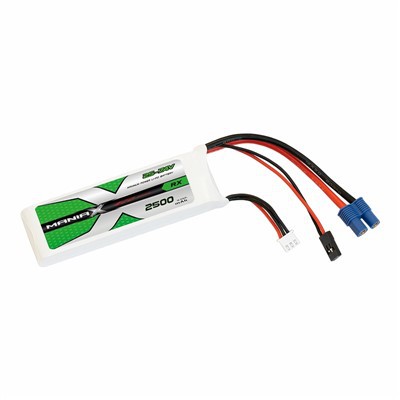
I know this seems like a lot, but it’s all super simple stuff that takes 2 minutes to do, and will make your 100C HV hardcase lipo last twice as long. At the end of the day, these packs are built for performance, but they’re also investment pieces. I sell these to racers and busters who want the best, and I want them to get the most out of their purchase. If you follow these tips, you won’t have to replace your pack every few months, and you’ll keep getting that insane power lap after lap.
Multi-Rotors Drone 25C Lipo Battery If you’re in the market for a new 100C HV Hardcase Car Lipo, or if you have a pack that’s acting up, hit me up to chat. I know the ins and outs of these packs, and I can help you with maintenance tips, troubleshooting, or picking the right pack for your RC. Don’t waste your hard-earned cash on packs that die too soon—take care of ’em, and they’ll take care of you.
References
- Lipo Battery Maintenance Guidelines, International RC Hobby Association, 2022
- High Voltage Lipo Chemistry and Performance Characteristics, RC Battery Tech Journal, Vol. 8, No. 3, 2021
- Hardcase Lipo Durability Testing, RC Performance Lab, 2023
- Safe Lipo Charging and Storage Protocols, National Model Aviation Association, 2020
ManiaX Power Technology Co., Ltd.
ManiaX Power Technology Co., Ltd. is one of the most reliable 100c hv hardcase car lipo manufacturers and suppliers in China, also supports customized service. Please feel free to wholesale bulk durable 100c hv hardcase car lipo made in China here from our factory.
Address: Room 1508, 15/F, Two Grand tower, 625 Nathan Road, Kowloon, HongKong. P.R. China
E-mail: info@maniax-power.com
WebSite: https://www.maniaxpower.com/
