In the dynamic landscape of mechanical engineering, planetary drives have long been a cornerstone for various industrial applications. As a planetary drive supplier, I’ve witnessed firsthand the evolution of this technology and the exciting emerging trends that are reshaping its design. This blog post delves into the latest advancements in planetary drive design, exploring how these technologies are enhancing performance, efficiency, and reliability. Planetary Drive

1. Advanced Materials and Manufacturing Techniques
One of the most significant emerging trends in planetary drive design is the use of advanced materials. Traditional materials like steel have served well, but new materials offer improved strength – to – weight ratios, corrosion resistance, and reduced friction. For example, carbon fiber composites are being increasingly explored for use in planetary drive components. These composites are incredibly lightweight yet possess high tensile strength, which can lead to a significant reduction in the overall weight of the drive system. This not only improves the efficiency of the drive by reducing the inertia but also allows for more compact designs, which is crucial in applications where space is limited.
In addition to materials, advanced manufacturing techniques are revolutionizing the production of planetary drives. Additive manufacturing, also known as 3D printing, has emerged as a game – changer. With 3D printing, it is possible to create complex geometries that were previously impossible or extremely difficult to manufacture using traditional methods. This allows for the optimization of gear shapes and internal structures, leading to better load distribution and reduced stress concentrations. For instance, 3D – printed gears can have customized tooth profiles that improve meshing efficiency and reduce noise levels.
2. Smart and Connected Planetary Drives
The era of the Internet of Things (IoT) has not bypassed the field of planetary drive design. Smart and connected planetary drives are becoming increasingly popular. These drives are equipped with sensors that can monitor various parameters such as temperature, vibration, torque, and speed in real – time. By collecting and analyzing this data, it is possible to detect potential issues before they lead to major failures. For example, abnormal vibration patterns can indicate misalignment or wear in the gears, and early detection can prevent costly downtime.
Moreover, the data collected from these sensors can be used for predictive maintenance. Predictive maintenance algorithms can analyze the sensor data to predict when a component is likely to fail, allowing for scheduled maintenance rather than reactive repairs. This not only reduces maintenance costs but also improves the overall reliability of the planetary drive system.
3. Energy – Efficient Designs
In today’s world, energy efficiency is a top priority. Planetary drive designers are focusing on creating more energy – efficient designs. One approach is the use of optimized gear ratios. By carefully selecting the gear ratios, it is possible to minimize energy losses during power transmission. For example, in a multi – stage planetary drive, the gear ratios can be adjusted to ensure that the drive operates at its most efficient point over a wide range of loads.
Another aspect of energy – efficient design is the reduction of friction. New lubricants and surface treatments are being developed to reduce friction between the gears and other moving parts. Low – friction materials and coatings can significantly improve the efficiency of the drive by reducing the amount of energy wasted as heat. For instance, diamond – like carbon (DLC) coatings can be applied to gear surfaces to reduce friction and wear.
4. Integration with Electric Drives
With the increasing popularity of electric vehicles and renewable energy systems, the integration of planetary drives with electric motors is becoming more common. Electric drives offer several advantages, such as high torque density and precise control. Planetary drives can be used to further enhance the performance of electric drive systems.
In electric vehicles, for example, planetary drives can be used to adjust the torque and speed output of the electric motor to match the requirements of the vehicle. This allows for better acceleration, improved efficiency, and longer battery life. In renewable energy applications, such as wind turbines, planetary drives can be used to step up the low – speed rotation of the turbine blades to a higher – speed rotation suitable for generating electricity.
5. Enhanced Design Software and Simulation Tools
The development of advanced design software and simulation tools has had a profound impact on planetary drive design. These tools allow designers to create detailed 3D models of the drive system and simulate its performance under various conditions. For example, finite element analysis (FEA) can be used to analyze the stress distribution in the gears and other components, ensuring that they can withstand the expected loads.
Multi – body dynamics simulation can be used to study the motion of the planetary drive system, including the interaction between the gears, bearings, and other components. This helps in optimizing the design to reduce noise, vibration, and wear. Additionally, these simulation tools can be used to test different design concepts quickly and cost – effectively, without the need for physical prototypes.
6. Miniaturization and High – Precision Design
In many applications, there is a growing demand for smaller and more precise planetary drives. Miniaturization is achieved through the use of advanced materials and manufacturing techniques, as well as optimized design. For example, in medical devices and robotics, small – scale planetary drives are required to provide high torque in a compact space.
High – precision design is also crucial in applications where accurate motion control is required. Advanced manufacturing techniques, such as precision machining and grinding, are used to ensure that the gears and other components have tight tolerances. This results in smoother operation, reduced backlash, and improved overall performance.
Conclusion
The field of planetary drive design is experiencing a period of rapid innovation. From advanced materials and manufacturing techniques to smart and connected drives, energy – efficient designs, integration with electric drives, enhanced design software, and miniaturization, there are numerous emerging technologies that are shaping the future of planetary drives.
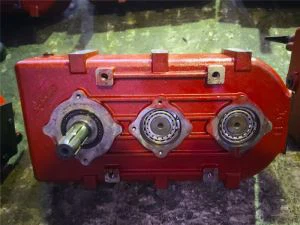
As a planetary drive supplier, I am excited about these developments and the opportunities they present. We are committed to staying at the forefront of these emerging technologies to provide our customers with the highest – quality planetary drive solutions. Whether you are in the automotive, aerospace, industrial automation, or renewable energy sector, our planetary drives can offer you improved performance, efficiency, and reliability.
Planetary Drive If you are interested in learning more about our planetary drive products or have specific requirements for your application, we invite you to reach out to us for a detailed discussion. Our team of experts is ready to assist you in finding the best planetary drive solution for your needs.
References
- "Gear Design and Application" by Dudley, D. W.
- "Mechanical Design Handbook" by Spotts, M. F.
- "Advanced Materials for Mechanical Engineering" by Ashby, M. F.
- "Internet of Things in Industrial Automation" by Lee, I. and Bagchi, S.
Jiangxi Merrypal Industry Co., Ltd
We’re known as one of the most professional planetary drive manufacturers and suppliers in China. If you’re going to wholesale bulk high quality planetary drive made in China, welcome to get quotation from our factory.
Address: Jinyumingdu 14-1507, Hongdu North Ave 299, Nanchang, P.R. China P.C:330046
E-mail: orientdriving@163.net
WebSite: https://www.everdrivingpump.com/
