Hey everyone, thanks for stopping by. I’m Jake, and I’ve been part of the elbow brace game for almost 10 years—first as a physical therapy tech, then as a supplier for our Elbow Immobilization Brace Series. These days, I get a ton of questions from athletic trainers, PTs, and even random people who find my social media: “How is your immobilization brace different from the ones at the drugstore, or the ones my doctor prescribed after surgery?” It’s a fair question, and honestly, it’s not just about the brand name—there’s actual science behind how our series plays (or doesn’t play) with other types of elbow braces out there. Let’s break this down, no fancy jargon, just real talk from someone who’s spent countless hours testing these things with patients. Elbow Immobilization Brace Series
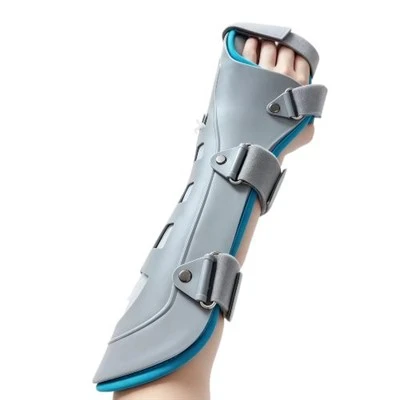
First off, let’s get on the same page about what “elbow immobilization” actually means. When you hurt your elbow—whether it’s a dislocated joint, a torn UCL, a bad fracture, or even a nasty sprain that just won’t quit—your goal is to hold it in a safe, static position so it can heal without extra stress. That’s exactly what our Elbow Immobilization Brace Series is built for: it’s designed to lock the elbow at a specific angle (usually 20 to 90 degrees, depending on the injury) and not let it bend or twist. But here’s the thing that trips a lot of people up: not all elbow braces are made for immobilization.
Take the basic drugstore elbow brace, the kind you grab in a hurry when you tweak your arm playing basketball. Most of those are neoprene sleeves with a little side support, right? They’re called “elbow sleeves” or “compression braces,” and their whole job is to reduce soreness, keep the area warm, and maybe ease mild tendonitis (like tennis elbow). The problem is, they don’t actually immobilize anything. If you wear our Elbow Immobilization Brace Series over one of these compression sleeves, you’ve basically created a buffer that keeps our brace from sitting flush against your elbow bones. That might sound like a good way to add comfort, but honestly? It messes with the fit. Our brace’s side struts are meant to press lightly against the humerus and ulna to lock the joint—if there’s a neoprene sleeve in between, that pressure gets uneven, and you might not get the full immobilization you need. I’ve seen a patient who did this after a dislocated elbow; they skipped the PT’s order to take off the sleeve, and they ended up with minor stiffness because the joint wasn’t held steady enough. Pro tip: if you’re using our immobilization brace, skip the extra compression sleeve underneath. Save that for when you’re fully healed and doing light activity.
Then there are the hinged elbow braces. These are the ones you see athletes in, or people coming back from surgery, that have metal hinges on the sides. They’re made to let you bend and straighten the elbow within a safe range, so you can rehab without risking more injury. Now, here’s how our series interacts with hinged braces—and it’s not great, mostly. Let me explain: our Elbow Immobilization Brace Series uses rigid, fixed side struts to keep the elbow from moving at all. Hinged braces, on the other hand, have those moving hinges that allow controlled motion. If you try to put a hinged brace on top of our immobilization brace, or even mix their positioning, you’re basically fighting two different systems. The hinges on the hinged brace will force the elbow to move a little, while our struts are holding it tight. The result? It’s uncomfortable, and you might even be putting extra stress on the ligaments because the brace is working against itself. The only time I’d ever say these two should be near each other is during a transition period in rehab—like when a patient is coming off immobilization and moving into the hinged brace phase, but even then, you take off our series before putting the hinged one on. I had a college football client who tried this after Tommy John surgery, and he ended up with a small sprain because the brace’s conflicting forces pulled on his healing UCL. Not worth it, trust me.
Another big category: functional elbow braces. These are the ones worn by people who’ve had surgery and need to use their arm a little while still protecting it. They’re flexible but have some support to keep the elbow from bending too far, like when you lift a grocery bag or reach for something. Now, our Elbow Immobilization Brace Series is for when you need zero motion—so if you’re wearing a functional brace during the day because you have to work, but your doctor prescribed our immobilization brace to wear at night (while you sleep, when you don’t have control over your movements), that’s actually a good combo. Wait, hold up—let me clarify that. It’s not wearing both at the same time; it’s wearing each at the right time. The functional brace is for active hours when you need to use your arm, and our immobilization brace is for rest hours to make sure the joint doesn’t shift while you’re unconscious. I’ve worked with a lot of post-surgery patients who do this, and their recovery times are often faster because they’re not putting unnecessary stress on the joint during the day, but they’re still getting the full immobilization they need when it matters most. The key here is communication with your PT—they’ll tell you exactly when to switch, but as long as you’re not wearing both at once, this pairing works really well.
Now, let’s talk about a common mistake I see people make with our series: mixing it with a tennis elbow strap. That little band that goes around the forearm, just below the elbow, to take pressure off the tendonitis. A lot of people think adding one will make their pain better while immobilizing, but again—fit is everything. Our Elbow Immobilization Brace Series sits right at the elbow joint, so if you put a tennis elbow strap on top or underneath, it pulls the brace off the correct angle. I had a middle-aged teacher who wore our brace after a radial head fracture, and she added the tennis strap because her forearm was sore. She ended up with the brace rotated downward, so it wasn’t holding her elbow at the 45-degree angle her doctor ordered. She had to wear it wrong for two days before she realized, and we had to adjust the brace and her pain meds to fix it. Moral of the story: if you have tendonitis on top of your elbow injury, talk to your PT about treating that separately while you’re immobilizing. Don’t just slap a strap on top of our brace—you’re messing with the fit that’s supposed to hold your joint stable.
Here’s something you might not hear from other suppliers: our Elbow Immobilization Brace Series isn’t a one-size-fits-all, so how it interacts with other braces also depends on the size and the injury. For example, a pediatric patient with a fractured elbow has smaller bones, so the fit is even more critical. If you’re pairing our kid-sized immobilization brace with a compression sleeve, the bulk of the sleeve will throw off the angle way more than it would for an adult. For older adults with weaker bones, adding any extra layer (like a hinged brace) can increase the risk of pressure sores because the brace is sitting tighter in certain spots. That’s why we’ve designed our series with foam padding that’s contour-fit, so it doesn’t need extra layers to be comfortable—no more excuses for adding stuff that messes things up.
I know it might sound like I’m saying all other braces are bad, and mine is the only one that works. That’s not true! Each type of elbow brace has a specific job, and the best approach is using the right one for the right time. The big takeaway here is that our Elbow Immobilization Brace Series is built for static, no-motion healing—so any other brace that allows movement, or adds bulk, is going to conflict if you try to wear them at the same time. But when used as directed, either alone or paired with a complementary brace (like a functional brace during the day), it’s super effective.
If you’re reading this and you’re a PT, athletic trainer, or even someone dealing with an elbow injury right now, and you’re confused about which brace to use, or how to pair our series with other ones—hit me up. I’ve spent years testing these products with real patients, and I can help you figure out the right plan for your injury. Whether you’re restocking for your clinic or looking for a brace to recommend to your patient, we’ve got a range of sizes in our Elbow Immobilization Brace Series, and we’re always here to answer questions. Don’t just guess—get the right advice to make your recovery go smoother.
Lumbar Support Brace Reference List
- American Academy of Orthopaedic Surgeons. (2021). Elbow Injuries: Treatment and Recovery Guidelines. AAOS Press.
- Brotzman, S. B., & Wilk, K. E. (2019). Clinical Orthopedic Rehabilitation (4th ed.). Elsevier.
- Magee, D. J. (2020). Orthopedic Physical Assessment (7th ed.). Saunders.
Hebei Maidike Medical Equipment Co., Ltd.
Hebei Maidike Medical Equipment Co., Ltd. is one of the most professional elbow immobilization brace manufacturers and suppliers in China, also supports customized service. We warmly welcome you to wholesale bulk durable elbow immobilization brace in stock here from our factory. Contact us for free sample.
Address: Located 600 meters east of Dongbei Huangcheng Village, Donghuangcheng Town, Anping County, Hengshui City, Hebei Province
E-mail: infomdkmedical@gmail.com
WebSite: https://www.hebeimdk.com/
