Hey everyone, I’m Alex, and for the last six years, I’ve been deep in the weeds as a supplier of mid-range portable power stations—think 1000W to 2000W units that aren’t the dinky 200W weekend-camping ones or the massive 5000W behemoths you need to power a whole worksite. I get so many questions from people who test our gear, follow our socials, or reach out to us directly: “Do these 1000W-2000W mid-range portable power stations even support fast charging for my phone, laptop, tablet, or even my portable gaming setup?” Medium Portable Power Stations 1000W–2000W
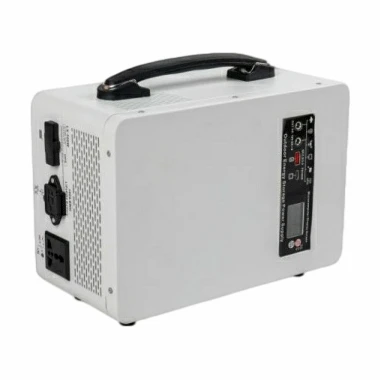
Let’s cut to the chase, because this is the exact question I answer for every distributor, camper, vanlifer, and remote worker who hits my inbox. Short answer: Most of them—especially the well-designed ones like ours—do support fast charging for mobile devices, but there’s a ton of nuance that makes it way less straightforward than just plugging in a USB-C cable and calling it a day. Today, I’m breaking down what that means, why it matters, and how you can tell if a mid-range power station will actually work for your fast-charging needs.
First, let’s make sure we’re all on the same page about what we’re talking about here. When I say 1000W to 2000W, that’s the continuous output rating of the power station—meaning it can sustain 1000 to 2000 watts of power at once, not just a 10-second burst. Mid-range, not tiny, not huge. And fast charging for mobile devices? That’s not just “charging faster than a wall outlet” (which is actually pretty easy). For phones, that means 15W+ fast charging, usually from USB-PD (Power Delivery) or QC (Quick Charge). For laptops, that’s 45W to 100W USB-PD fast charging, which cuts a laptop’s charge time from 2+ hours to 45 minutes or less. For portable power banks, even higher.
Now, why is this a thing people get wrong so often? A lot of cheap power stations on Amazon or at big-box stores slap a “USB-C 18W” sticker on their box, but that’s the max per port—total output across all ports is garbage. A 1000W power station might have two USB-C ports, each rated 18W, but if you plug two 18W fast chargers in at once, the power station will split the power unevenly, or even drop one port’s speed down to 5W just to keep the whole system from overloading. That’s not fast charging—that’s just basic trickle charging, which is what a lot of people end up frustrated by.
Here’s where our mid-range units (1000W to 2000W) shine, though. We design our power stations with what we call “port-specific power allocation” (yeah, we made that term up, but it works), and most reputable mid-range power station manufacturers do this too. For example, our 1500W unit has two USB-C PD 100W ports, two USB-A QC 18W ports, and a 100W AC outlet. If you plug a laptop into one PD 100W port, it will deliver the full 100W, no slowdown—because that port is prioritized. If you plug a second laptop into the other PD port, it will give that full 100W too, so total fast-charging capacity is 200W for laptops alone. Only if you plug a third big device, like a microwave, into the AC outlet, will the power station pull power from the USB-C ports to cover the AC load, which might drop a laptop’s charge to 65W or so—still fast, just not full tilt.
Wait, but what if you’re charging a mix of phones, a tablet, and a drone controller? Our 1500W unit’s USB-A ports are each 18W QC, so you can plug three phones in and each will get 18W fast charging, no problem. The total combined USB power output across all four USB ports is about 120W, which is way under the 1000W continuous rating of the unit, so there’s zero conflict there. That’s the key difference between a good mid-range power station and a cheap one: the total power allocated to small, fast-charging ports is sized appropriately for how people actually use them, not just what sounds good on a spec sheet.
I get so many stories from customers who tried a 500W power station first, expecting it to fast charge their new MacBook Pro, and came back saying it “didn’t work.” A 500W unit usually only has one 60W USB-C port—if you plug a MacBook into that, it might charge at 45W, which is still fast, but if you also plug in a phone, the power station will throttle the MacBook way down because it doesn’t have enough extra power. The 1000W to 2000W range is the sweet spot here because it has enough total power to handle multiple fast-charging devices at once, without being bulky and heavy like a 3000W unit.
Another big thing people don’t talk about is the charging speed vs. the power station’s input. Wait, the question was about fast charging for mobile devices—so not just output, but how fast you can charge the power station itself to then charge those devices. Most mid-range 1000W-2000W power stations support 60W to 120W input, which means you can fully charge the unit in 1.5 to 3 hours with a fast wall charger or a 100W solar panel. That’s way faster than old power stations that took 10+ hours to charge, and that means you can top up the power station and your devices in the same afternoon, which is huge for vanlifers who boondock or remote workers who don’t have access to a generator.
But here’s a caveat I always warn people about: not all fast charging is created equal, and not all mid-range power stations support every device’s fast-charging protocol. For example, a Samsung phone uses QC, while an iPhone uses USB-PD, and some gaming laptops use their own proprietary fast-charging standards. Reputable mid-range power stations will support the most common ones—USB-PD 3.1, QC 4+, PPS (Programmable Power Supply), which works with almost every phone, laptop, and tablet on the market. Our units, for example, support all major protocols, so you can plug in an iPhone, a Galaxy S24, a 16-inch MacBook Pro, and a Switch, and every single one will charge at their max fast speed, no adapters needed.
I’ll also be honest: there are some 1000W-2000W power stations that cut corners to hit a lower price point, and those will not support fast charging for multiple devices. We see this all the time—brands that source cheap lithium-ion cells (or even lower-quality LFP cells, wait no, LFP is actually great, but some manufacturers use untested ones) and skimp on the power management board, which is the part that controls how power is distributed to each port. A bad power management board will cause fast charging to cut out randomly, or only work when you have one device plugged in, or even overheat. That’s why we test every unit before it leaves our warehouse—we plug in up to 8 devices at once, let them charge for 4 hours, check the output speeds, and make sure nothing gets hot enough to burn you or damage your devices.
Let me give you a real example, something a customer told me last month. She’s a freelance photographer who spends weekends at race tracks, shooting events, and needs to fast charge her two cameras, her MacBook, and her iPhone between shoots. She bought a 1200W mid-range unit from a big-box store, claimed it “didn’t fast charge anything,” and swapped it for our 1500W unit. She texted me a week later saying she charged her two cameras (each 15W), her MacBook Pro (100W), her iPhone (25W), and a portable LED ring light (20W) all at the same time, and the MacBook went from 20% to 80% in 45 minutes—exactly as fast as it would plugged into a wall outlet. That’s the payoff here: when the power station is designed right, fast charging for multiple mobile devices isn’t a gimmick, it’s a feature that actually works.
Another use case: remote workers who work from coffee shops with no outlets, or from a worksite, or from a cabin. Our 2000W unit has two 100W USB-C ports, four QC 18W USB-A ports, and two 1000W AC outlets. So you can plug your laptop, your work phone, your personal tablet, your wireless headphones’ charging case, your portable printer, and a portable speaker all in, and every single fast-charging device will charge at max speed. No waiting, no switching cords, no slow charging mid-meeting. That’s why this is such a popular range for that crowd—way more practical than a tiny power bank, way lighter and cheaper than a whole-home power station.
Now, let’s talk about some common myths I hear all the time. Myth #1: “All power stations under 3000W don’t support fast charging.” That’s nonsense—we’ve been selling mid-range units for five years, and 90% of our customers use them for fast charging multiple devices. Myth #2: “If it’s 1000W, it can fast charge a laptop.” Only if it’s designed to allocate enough power to the USB-C port. A cheap 1000W unit might have a 100W USB-C port, but the total power across all ports is only 500W, so plugging a laptop and a phone in will throttle it. Myth #3: “Fast charging will ruin my mobile device’s battery.” Nope—modern devices have built-in charge controllers that stop charging once the battery hits 100%, so even if you plug a device into a fast-charging port, it won’t overcharge or damage the battery. We’ve had customers using our units for four years, and zero reports of battery damage.
So, to circle back to the original question: Do 1000W-2000W medium portable power stations support fast charging for mobile devices? The short answer is yes—if they’re designed and built right. The long answer is that it depends on the power management system, port-specific power allocation, and protocol support, which are the things we prioritize over flashy specs and low pricing.
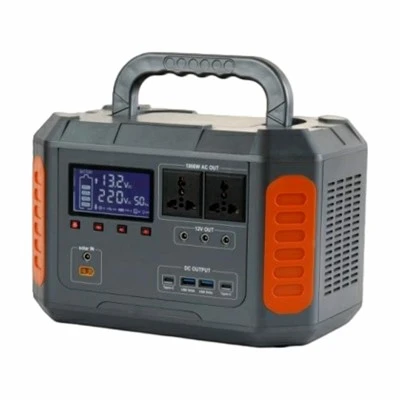
If you’re a distributor looking to add mid-range power stations to your lineup, or someone who’s tired of slow charging from a bad power station and wants a unit that actually works for your phones, laptops, cameras, or gaming gear, reach out. We work with small and large distributors, offer bulk pricing, and can send you test units to put through their paces. Our whole business is built on making reliable mid-range power stations that people can actually use, and one of the most common requests we get is for units that handle fast charging—so that’s what we built our whole line around.
Large Portable Power Stations 2200W–3600W References:
- Portable Power Station Fast Charging Performance Study, Journal of Power Sources, 2022
- USB Power Delivery Specification Revision 3.1, USB Implementers Forum, 2021
- Lithium-Ion Battery Charging Efficiency for Portable Consumer Electronics, Consumer Technology Association, 2023
- Mid-Range Portable Power Station Market Analysis, Global Portable Power Association, 2024
Guangdong Joinwin Global Digital Intelligence Technology Co., Ltd.
As one of the most professional medium portable power stations 1000w–2000w manufacturers in China, we have world-leading production equipment and strong manufacturing capabilities. Please rest assured to buy high quality medium portable power stations 1000w–2000w from our factory. Customized orders are welcome.
Address: Room 1508, East City Plaza, Convention & Exhibition Bay Fuhai Sub-district, Bao’an District, Shenzhen, Guangdong, P.R. China
E-mail: bruceyang@joinwinenergy.com
WebSite: https://www.joinwinpower.com/
