Hey there, if you’ve ever ordered aluminum foil jumbo rolls for your food packaging, hospitality, or industrial business, you’ve probably stared at the big roll sitting on your loading dock and thought, “Wait—all those tiny letters and numbers on the label actually mean something, right?” As someone who’s been supplying aluminum foil jumbo rolls for over 8 years (I’m Jake, head of sales at my family’s small operation—no fancy corporate fluff here), I see this all the time. New buyers skip over the markings, and end up ordering the wrong thickness for their sandwich wrap line, or accidentally grabbing a roll that’s too thin for their commercial baking needs. Today, let’s break down what those labels actually mean—no boring textbook jargon, just real, useful info that’ll save you headaches on your next order. Aluminum Foil Jumbo Roll
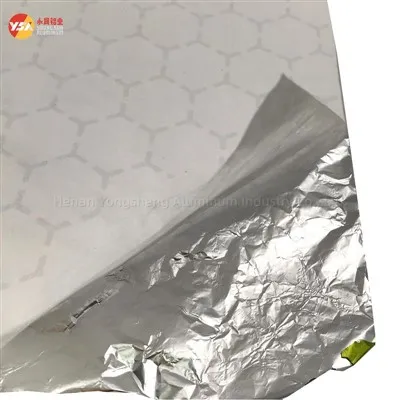
First off, let’s get one thing straight: not all foil labels are exactly the same, but most reputable suppliers stick to a standard set of markings. We’ve got our own system that I’ve tweaked over the years to make it easy for regulars to glance at a roll and know exactly what they’re getting, and it’s aligned with what other top suppliers use too. Let’s start with the most basic stuff you’d expect, because you’d be surprised how often people miss these.
First up: the alloy number. This is the first line most people see, usually something like “8011” or “1235” printed in bold. I know, it just looks like random numbers, but it’s super important. 8011 is the workhorse of the aluminum foil world—90% of the foil you use for food packaging, takeout containers, even household wrap is 8011. It’s flexible, doesn’t tear easily when you crimp it around a takeout container, and has just the right amount of moisture resistance. The other common one is 1235, which is a purer, thinner alloy. We almost never use 1235 for commercial or industrial orders because it’s way too flimsy—perfect if you’re making super thin household wrap, but not for our clients running 100,000 burger boxes a week through their line. I once had a client order “thin foil” and accidentally get a roll of 1235; their whole production line jammed because it kept tearing when fed through their wrapping machine. We fixed it, obviously, but that’s a mistake that could’ve been avoided if they’d checked the alloy number.
Next up: gauge thickness, which is written as a decimal, like “0.0009 mm” or “0.0015 mm” (or sometimes in thousandths of an inch, but these days most of our clients ask for metric, so we print that too). This is non-negotiable. Gauge is how thick the foil is—lower number means thinner foil, higher means thicker. For example, 0.0009 mm is the super thin stuff you buy in grocery stores for wrapping sandwiches, but that’s garbage for a commercial line that’s crimping foil around hot chili cans. That needs at least 0.0015 mm, sometimes 0.0018 mm, so it doesn’t crack when folded and leak heat. I can’t tell you how many times a buyer has said “just give me the thinnest roll you have” only to call us a week later panicking because their food is getting soggy or their wrapping machine is rejecting the foil. The gauge marking is there to make sure you don’t do that. Pro tip: if you’re not sure, tell us what you’re using the foil for, and we’ll match the right gauge. No need to guess.
Then we have the width of the roll. That’s usually a number followed by “in” or “mm,” like “48 in” or “1219 mm.” Jumbo rolls come in all different widths because they’re made to be run through converting machines that cut them down to smaller rolls. If you’re a takeout packaging company, your converting machine might take a 48-inch jumbo roll and cut it into 12-inch wide rolls for your sandwich bags, so you need to order a jumbo roll that’s exactly 48 inches wide. The worst part? If you order the wrong width, you can’t just “make it work”—you’ll waste foil, which is expensive, and delay your order. We once had a client order a 60-inch roll by accident, and they ended up having to pay to send it back and reorder, because their machine wouldn’t fit the wider roll. That’s a $2,000 mistake just because they skipped the width marking. And yes, we’ve had people mix up length and width too—length is usually on the end label, like “10,000 meters total length,” but width is the measurement across the roll, so pay close attention to that.
Now, the stuff that’s specific to how the foil is processed: temper code. That’s a letter, usually “O,” “H14,” or “H18.” Let’s keep this simple: “O” is annealed foil, which means it’s soft, flexible, great for wrapping things that need to conform to a shape, like foil liners for baking pans. “H14” is semi-hard—sturdier than “O,” holds its shape really well, perfect for commercial baking sheets, foil trays, or takeout containers that need to stand up on their own. “H18” is full hard, that’s the rigid stuff used for things like bottle caps or foil blister packs for pharmaceuticals. I know, temper codes sound like spy stuff, but they’re a quick way to tell how stiff the foil is without having to touch it. If you’re making a disposable foil coffee cup liner, you want “H14”—it won’t crumple when you pour hot coffee into it. If you get “O” by mistake, it’ll flop over, and you’ll have a mess on your hands. We always write the temper code right next to the gauge, so it’s easy to spot.
Wait, there’s also the coating info, right? Most aluminum foil for food use gets a food-grade polymer coating on one or both sides, and that’s marked too. If you see “1S” or “2S,” that means one side is coated or two sides, respectively. Coating is important because it adds extra moisture resistance, prevents the foil from sticking to food (especially things like cheese or bread that have oil), and makes it heat-resistant for ovens or microwaves. If you’re using foil for takeout, you definitely want a coated roll—uncoated foil will stick to your food and leave a messy residue on the packaging. We only use FDA-approved food-grade coatings, which we also print a little note about on the label, so our clients know it’s safe for their products. No cutting corners here—food safety is non-negotiable.
Then there’s the roll ID number, which is a mix of letters and numbers, like “JUM-8011-0012.” This is for our internal tracking, but it’s also useful for our clients if they need to reorder. If a client runs out of a roll that works perfectly for their line, they can just send us that ID number, and we’ll pull up exactly what they ordered, no questions asked. It saves time on both ends, because we don’t have to go back and forth asking “wait, what gauge did you use again?” and they don’t have to describe the roll over the phone. I always tell regulars to note that ID down somewhere, because it’s a lifesaver when you’re in a pinch.
Oh, and one thing a lot of new buyers miss: the manufacturer’s mark and date code. The manufacturer’s mark is just our logo or name, easy enough, but the date code is important because aluminum foil doesn’t go bad, but if you’re storing large rolls for a long time (like a year or more), the coating can degrade a tiny bit, especially if it’s stored in a hot, humid warehouse. The date code is usually printed as a 4-digit number, like “2403” meaning March 2024. We don’t sell old stock, so all our rolls are less than 6 months old when they ship, but it’s good to check if you’re buying from a supplier you don’t know—you don’t want to end up with a roll that’s been sitting in a warehouse for 3 years, with a coating that’s no longer food-safe.
Wait, let’s talk about a common mix-up I see all the time: labels on jumbo rolls vs. labels on the smaller rolls you buy at the store. The household foil you get at the grocery store is a tiny fraction of a jumbo roll, and their labels are way simpler. They’ll say “12 inches wide, 50 feet long, household use,” but that’s not enough for industrial or commercial buyers. Our jumbo roll labels have all those extra specs because we sell to businesses that need precise measurements to keep their production lines running smoothly. I once had a guy who runs a small bakery buy a jumbo roll from another supplier that had vague labels, and he ended up with a roll that was only 0.001 mm thick, which was too thin for his commercial oven trays. He switched to us after that, because we make sure every marking is clear and exact.
Now, let’s get real for a second. I know some suppliers make their labels as confusing as possible to hide that they’re sending the wrong product. But that’s not how we do things. Our labels are big, bold, and all the key info is right at the top, so you don’t have to squint at tiny print to find what you need. We also print a quick little blurb at the bottom about what the roll is best for, just as a reminder—like “Best for: Takeout containers, baking trays” right next to the gauge and temper. It’s not that we don’t trust our clients to know what they need, it’s just that it’s easy to mix up numbers when you’re ordering 10 rolls at a time.
Let me wrap this up with a little practical tip, since I’m your guy for real-world info. If you’re ever ordering aluminum foil jumbo rolls, don’t just look at the brand name—actually check those markings. Make sure the alloy is right for your use, the gauge is thick enough for your production line, the width matches your converting machine, and the coating is food-safe if you’re using it for food. And if you’re not sure about any of it, just ask. No question is too small for our team—we’d rather you ask now than have to deal with a bad roll later.

If you’re in the market for aluminum foil jumbo rolls for your food packaging, hospitality, or industrial business, we’ve got a huge stock of rolls ready to ship, all with clear, easy-to-read markings so you never have to guess what you’re getting. Just reach out to our team to start a conversation about your needs—we’ll match you with exactly the right roll, no fine print, no hidden fees, just good quality foil that works for your business.
Aluminum Foil References
- Aluminum Association. (2022). Standard Designations for Aluminum Alloys.
- Food and Drug Administration. (2021). Food-Safe Coatings for Aluminum Foil.
- Industrial Packaging Association. (2023). Specifications for Aluminum Foil Jumbo Rolls.
Henan Yongsheng Aluminum Industry Co., Ltd.
We are one of the most reliable aluminum foil jumbo roll manufacturers and suppliers in China. With abundant experience, we warmly welcome you to buy high-grade aluminum foil jumbo roll for sale here from our factory. All custom made products are with high quality and competitive price.
Address: Gongyi City Industrial Cluster District, Huiguo Town, Gongyi City, Henan Province
E-mail: eric@ysaluminum.cn
WebSite: https://www.ysaluminummill.com/
