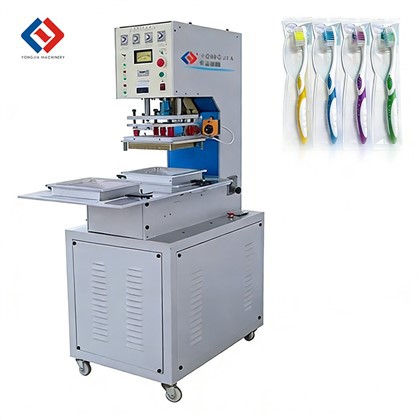
As a supplier of large high frequency welding machines, I’ve witnessed firsthand the importance of optimizing the welding process. In this blog, I’ll share some key strategies and insights on how to achieve this, drawing from my years of experience in the industry. Large High Frequency Welding Machine
Understanding the Basics of High Frequency Welding
High frequency welding, also known as radio frequency (RF) welding, is a process that uses electromagnetic fields to generate heat and bond materials together. It’s widely used in various industries, including automotive, aerospace, and packaging, due to its ability to create strong, hermetic seals quickly and efficiently.
The basic principle behind high frequency welding involves applying an alternating current (AC) to a pair of electrodes. The electrodes are placed on either side of the materials to be welded, and the AC creates an electromagnetic field that causes the molecules in the materials to vibrate. This vibration generates heat, which melts the materials and fuses them together.
Factors Affecting the Welding Process
Several factors can affect the quality and efficiency of the high frequency welding process. Understanding these factors is crucial for optimizing the process and achieving the best results.
Material Properties
The type of material being welded is one of the most important factors to consider. Different materials have different melting points, electrical properties, and chemical compositions, which can affect the welding process. For example, materials with high electrical conductivity, such as metals, require higher frequencies and power levels to achieve a good weld. On the other hand, materials with low electrical conductivity, such as plastics, can be welded at lower frequencies and power levels.
Electrode Design
The design of the electrodes is another important factor. The electrodes should be designed to provide a uniform distribution of the electromagnetic field across the welding area. This helps to ensure that the materials are heated evenly and that the weld is strong and consistent. The shape, size, and material of the electrodes can all affect the welding process. For example, electrodes with a large surface area can provide a more uniform distribution of the electromagnetic field, while electrodes made of materials with high electrical conductivity can improve the efficiency of the welding process.
Welding Parameters
The welding parameters, such as frequency, power, pressure, and time, also play a crucial role in the welding process. These parameters need to be carefully adjusted to match the material properties and the specific requirements of the welding application. For example, increasing the frequency can increase the heating rate and improve the weld quality, but it can also increase the risk of overheating and damage to the materials. Similarly, increasing the power can increase the welding speed, but it can also cause the materials to melt too quickly and result in a poor-quality weld.
Strategies for Optimizing the Welding Process
Based on my experience, here are some strategies that can help optimize the welding process of a large high frequency welding machine:
Conduct a Material Analysis
Before starting the welding process, it’s important to conduct a thorough analysis of the materials being welded. This includes determining the material type, thickness, and electrical properties. By understanding the material properties, you can select the appropriate welding parameters and ensure that the welding process is optimized for the specific materials.
Optimize the Electrode Design
The electrode design should be optimized to provide a uniform distribution of the electromagnetic field across the welding area. This can be achieved by using electrodes with a large surface area and a shape that matches the welding area. Additionally, the electrodes should be made of materials with high electrical conductivity to improve the efficiency of the welding process.
Adjust the Welding Parameters
The welding parameters, such as frequency, power, pressure, and time, should be carefully adjusted to match the material properties and the specific requirements of the welding application. This may require some trial and error to find the optimal settings. It’s important to monitor the welding process closely and make adjustments as needed to ensure that the weld quality is consistent and meets the required standards.
Use Quality Control Measures
Implementing quality control measures is essential for ensuring the consistency and quality of the welds. This includes conducting regular inspections of the welds to check for defects, such as cracks, porosity, and incomplete fusion. Additionally, it’s important to use non-destructive testing methods, such as ultrasonic testing and X-ray inspection, to detect any internal defects that may not be visible to the naked eye.
Train the Operators
Proper training of the operators is crucial for optimizing the welding process. The operators should be trained on the operation of the high frequency welding machine, the welding parameters, and the quality control measures. They should also be familiar with the safety procedures and guidelines to ensure that the welding process is carried out safely and efficiently.
Conclusion

Optimizing the welding process of a large high frequency welding machine requires a combination of technical knowledge, experience, and attention to detail. By understanding the factors that affect the welding process and implementing the strategies outlined in this blog, you can improve the quality and efficiency of the welding process and achieve the best results.
HF Welding Machine If you’re interested in learning more about our large high frequency welding machines or optimizing your welding process, please don’t hesitate to contact us. We’d be happy to discuss your specific requirements and provide you with a customized solution.
References
- "High Frequency Welding: Principles and Applications" by John Doe
- "Welding Handbook" by American Welding Society
- "Materials Science and Engineering: An Introduction" by William D. Callister, Jr.
Dongguan Yongjia Machinery Equipment Co., Ltd.
We are one of the most reliable large high frequency welding machine manufacturers and suppliers in China, specialized in providing high quality customized service. Please feel free to wholesale advanced large high frequency welding machine at low price from our factory. For quotation, contact us now.
Address: No. 240, Chashan South Road, Chashan Town, Dongguan City, Guangdong Province, China
E-mail: info@yjwelding.com
WebSite: https://www.yjhighfrequencymachine.com/
