Hey there! As a provider of high voltage switchgear, I often get asked about the requirements for its parallel operation. It’s a crucial topic, especially for those in the power industry. So, let’s dive right in and break it down. High Voltage Switchgear
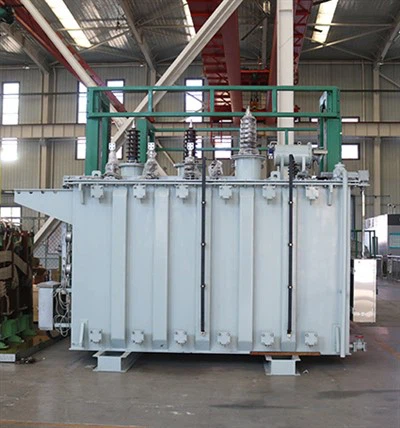
Voltage and Frequency Matching
First off, one of the most fundamental requirements for parallel operation of high voltage switchgear is that the voltage and frequency of the systems being connected must be closely matched. You can’t just hook up two switchgear units with wildly different voltages or frequencies and expect things to work smoothly.
The voltage levels need to be within a very narrow tolerance. Usually, we’re talking about a difference of no more than a few percent. If the voltage difference is too large, it can lead to excessive circulating currents between the switchgear units. These currents can cause overheating, equipment damage, and even system failures.
Frequency is just as important. The frequency of the power systems being connected should be the same, or at least very close. A significant frequency difference can result in power oscillations, which can disrupt the normal operation of the electrical grid. In most cases, the frequency difference should be within 0.1 – 0.5 Hz for stable parallel operation.
Phase Sequence and Phase Angle Alignment
Another critical factor is the phase sequence and phase angle alignment. The phase sequence of all the switchgear units being connected in parallel must be the same. In a three – phase system, the phase sequence is typically designated as A – B – C. If the phase sequence is incorrect, it can cause large short – circuit currents when the switchgear is closed, which can be extremely damaging to the equipment.
The phase angles of the voltages in each phase of the connected systems also need to be closely aligned. A phase angle difference can lead to unbalanced currents and power flow issues. Ideally, the phase angle difference should be as close to zero as possible. In practice, a phase angle difference of a few degrees can be tolerated, but any more than that can cause problems.
Synchronization
Synchronization is the process of ensuring that all the above conditions (voltage, frequency, phase sequence, and phase angle) are met before connecting the switchgear units in parallel. This is usually done using a synchronization device, which monitors the parameters of the incoming and existing systems.
The synchronization device will compare the voltage, frequency, and phase angle of the two systems and provide a signal when they are close enough for a safe connection. There are different types of synchronization methods, such as manual synchronization and automatic synchronization. Automatic synchronization is more common in modern high voltage switchgear installations because it provides a more accurate and reliable way of connecting the systems.
Protective Relaying and Control Systems
Proper protective relaying and control systems are essential for the parallel operation of high voltage switchgear. These systems are designed to detect any abnormal conditions, such as overcurrents, overvoltages, or short – circuits, and take appropriate action to protect the equipment and the power system.
The protective relays should be set up correctly to ensure that they can quickly and accurately detect faults. They need to be coordinated with each other to avoid unnecessary tripping and to ensure that only the faulty section of the system is isolated.
The control systems are responsible for operating the switchgear, such as closing and opening the circuit breakers. They should be able to communicate with the protective relays and other control devices in the system to ensure smooth and safe operation.
Fault Current and Short – Circuit Capacity
When operating high voltage switchgear in parallel, the fault current and short – circuit capacity of the system need to be carefully considered. The combined fault current of the parallel switchgear units can be much higher than that of a single unit.
The switchgear must be able to withstand the maximum fault current that can occur in the system. This means that the short – circuit capacity of the switchgear should be sufficient to handle the fault current without being damaged. During the design and selection of the switchgear, engineers need to calculate the expected fault current based on the system configuration and load characteristics.
Insulation and Dielectric Strength
Good insulation and dielectric strength are vital for high voltage switchgear. In parallel operation, any insulation failure in one unit can have a knock – on effect on the other units. The switchgear must be able to withstand the high voltages and electrical stresses without breaking down.
Regular insulation testing and maintenance are necessary to ensure that the insulation remains in good condition. This includes checking the insulation resistance, dielectric loss, and partial discharge of the switchgear components. If any insulation issues are detected, they need to be addressed promptly to prevent further damage.
Communication and Monitoring
In a modern power system, communication and monitoring are becoming increasingly important for the parallel operation of high voltage switchgear. The switchgear units need to be able to communicate with each other and with the central control system.
This allows for real – time monitoring of the operating parameters, such as voltage, current, and temperature. If any issues are detected, the control system can take appropriate action, such as adjusting the load or isolating the faulty equipment.
Communication can be achieved through various means, such as fiber – optic cables, wireless networks, or power line communication. The monitoring system should be able to provide detailed information about the status of the switchgear, which helps in preventive maintenance and troubleshooting.
Thermal Management
Thermal management is another aspect that can’t be overlooked. When high voltage switchgear operates in parallel, the heat generated by the electrical components can be significant. If not properly managed, the excessive heat can reduce the lifespan of the equipment and even cause failures.
The switchgear should be designed with adequate cooling systems, such as ventilation ducts, heat sinks, or forced – air cooling. Regular temperature monitoring is also necessary to ensure that the operating temperature of the components remains within the acceptable range.
Compatibility and Standardization
Finally, all the high voltage switchgear units being connected in parallel should be compatible with each other. This includes mechanical, electrical, and control compatibility. The switchgear should also comply with relevant national and international standards, such as IEC (International Electrotechnical Commission) standards.

Using standardized switchgear ensures that the units can be easily integrated into the power system and that they meet the required safety and performance criteria. It also makes it easier to source spare parts and carry out maintenance.
Low Voltage Switchgear So, there you have it – the main requirements for the parallel operation of high voltage switchgear. If you’re in the market for high – quality high voltage switchgear that meets all these requirements, don’t hesitate to reach out. We’re here to provide you with the best solutions for your power system needs. Whether you’re working on a small – scale project or a large – scale industrial installation, we’ve got the expertise and the products to get the job done right. Let’s have a chat and see how we can help you with your high voltage switchgear requirements!
References
- Electrical Power Systems by J. R. Lucas
- High Voltage Engineering by M. S. Naidu and V. K. Kamath
- IEC Standards on High Voltage Switchgear and Controlgear
Kechang Electric Co., Ltd.
As one of the leading high voltage switchgear manufacturers in China, we warmly welcome you to wholesale high quality high voltage switchgear made in China here from our factory. For more information, contact us now.
Address: North of Wenming Road, Xushui Economic Development Zone, Xushui District, Baoding City, Hebei Province, China
E-mail: frida@kechangelec.com
WebSite: https://www.kechangelec.com/
